Last updated October 30, 2026
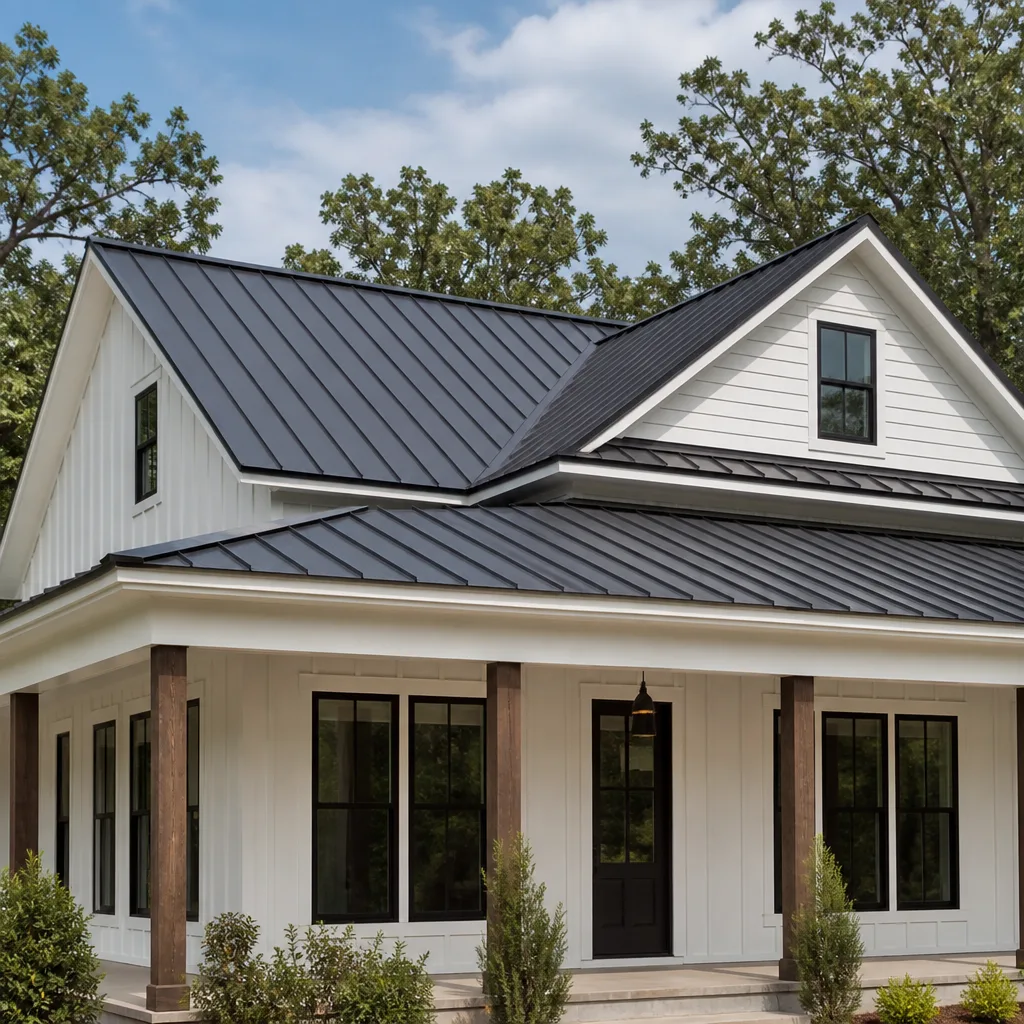 Metal roofing
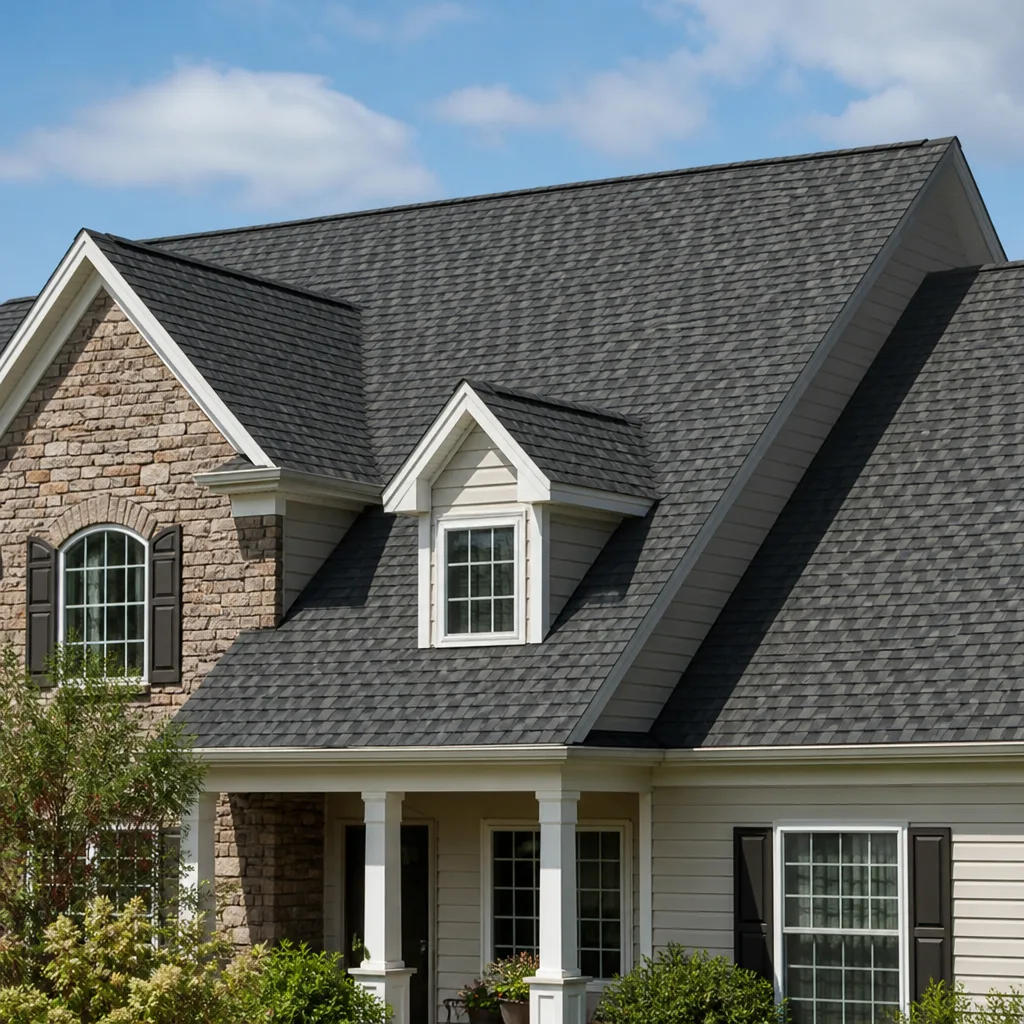 Architectural shingles
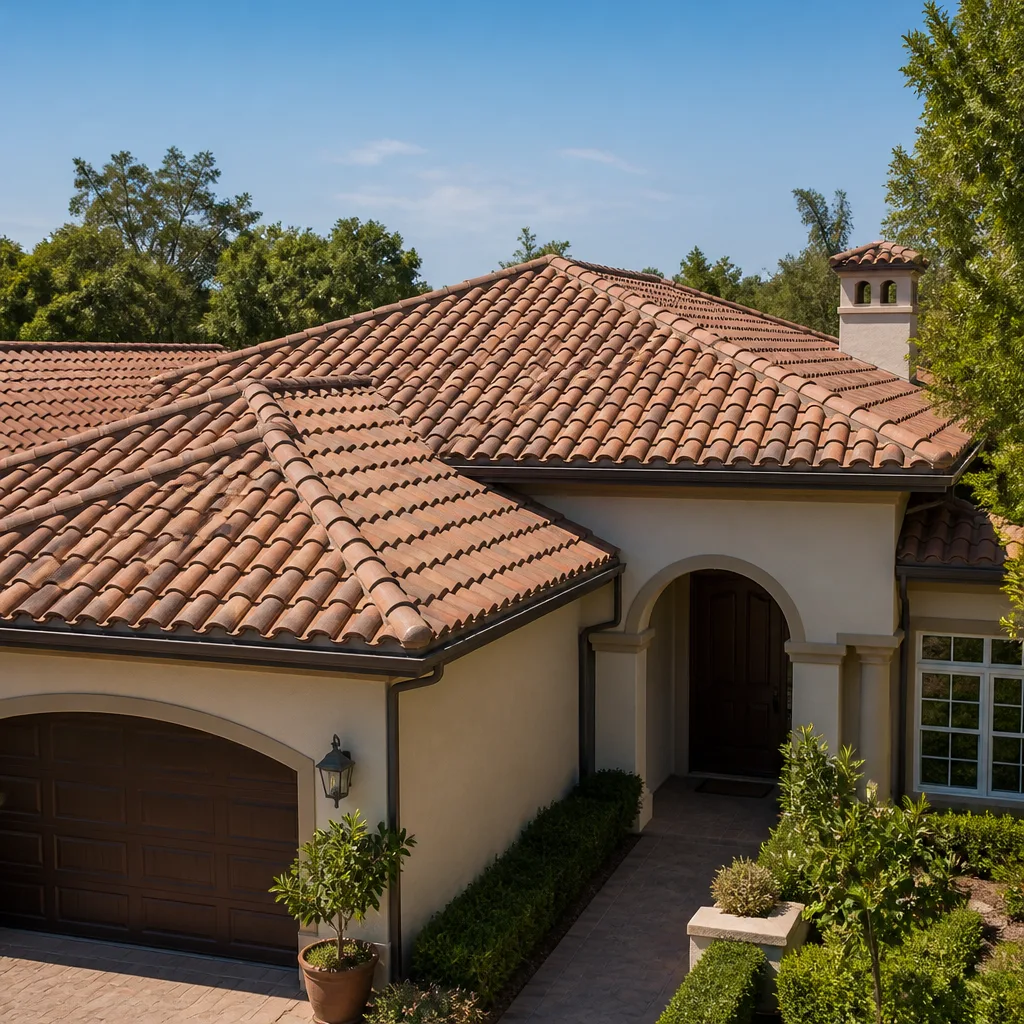 Tile roofing
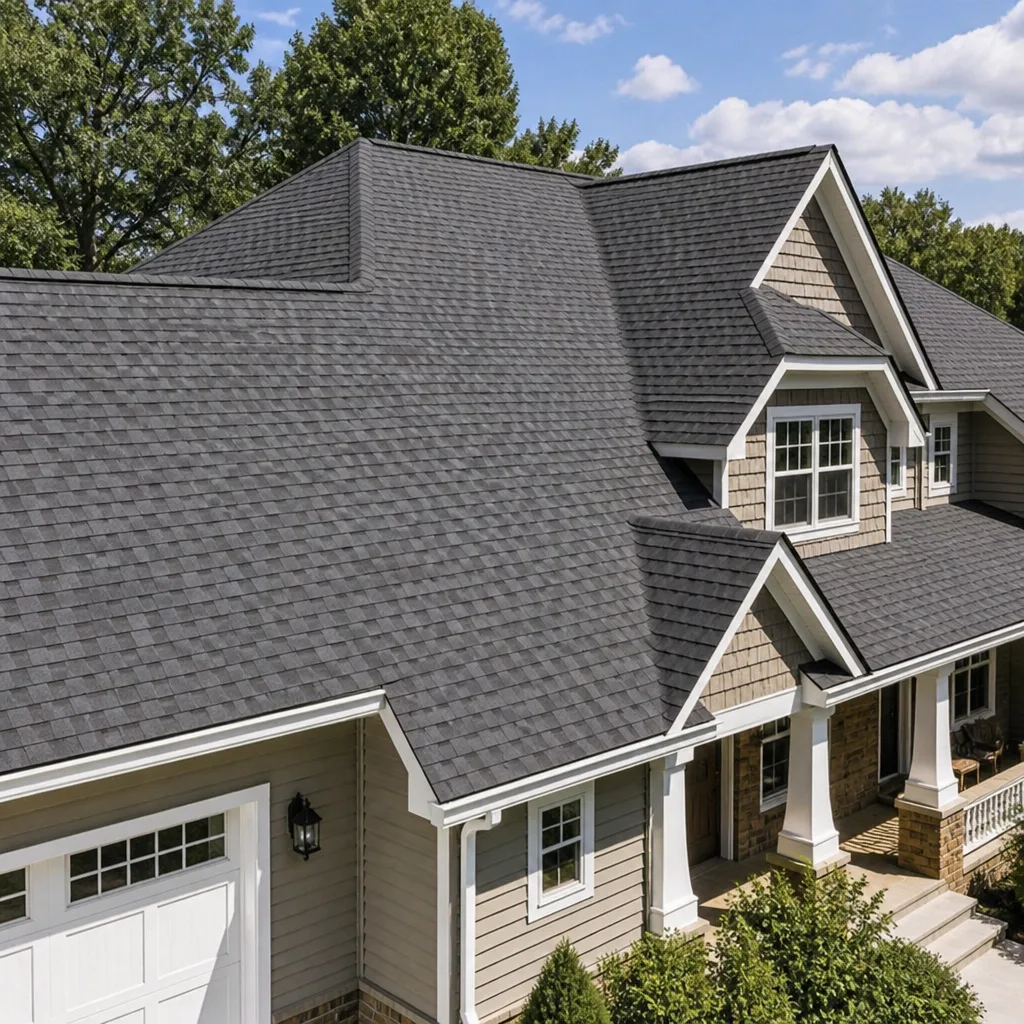 GAF
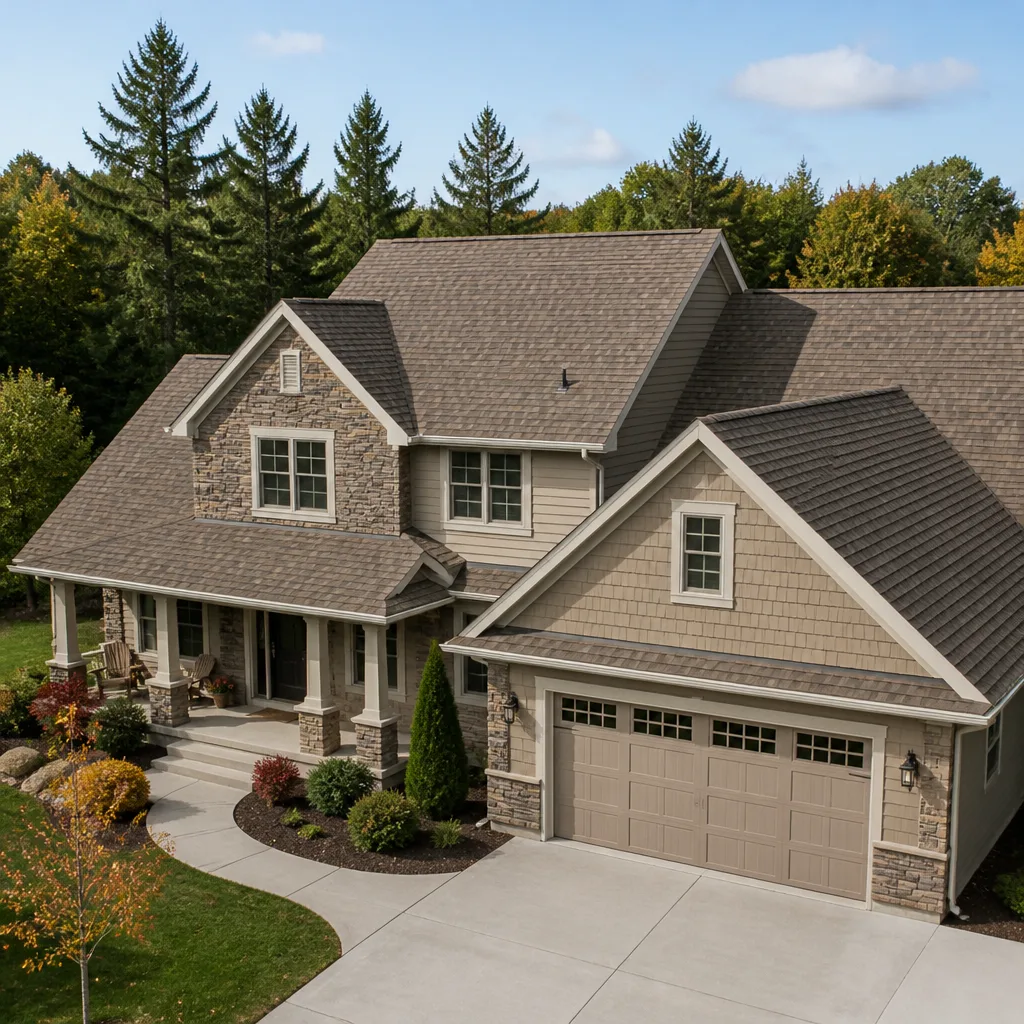 Owens Corning
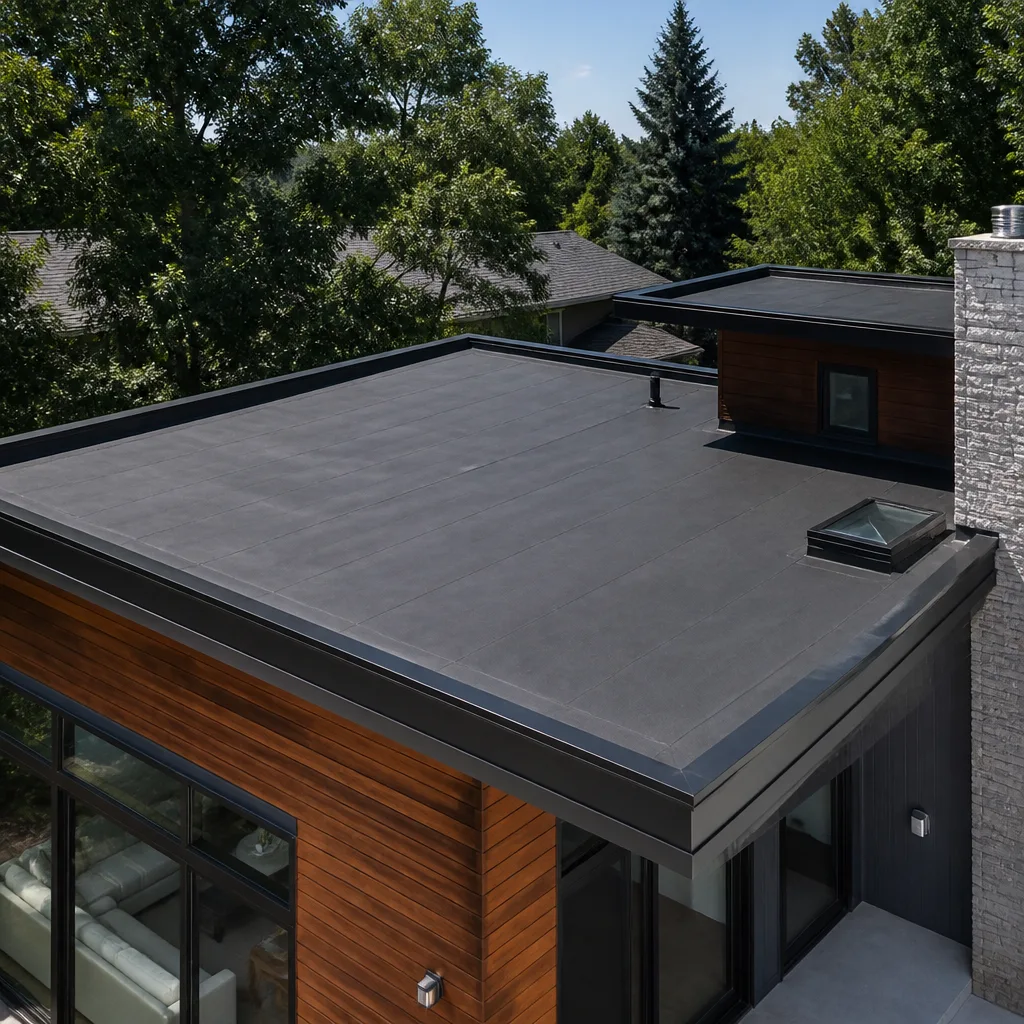 Flat & low-slope
Free roof inspection with deck photos before we talk money - GAF and Owens Corning certified installation
The Complete Guide to Roofing in Glendale
Glendale sits in three separate fire hazard severity zones, and the roofing material legal in one neighborhood may be code-prohibited two streets away. That’s not a quirk of bureaucracy; it’s a direct response to geography. The Verdugo Mountains don’t just frame the skyline, they shape wind patterns, ember drift, and sun exposure in ways that generic Southern California roofing advice completely misses. This guide explains what actually matters for a roof in Glendale: which materials pass fire code where, how wind direction changes flashing details, why clay tile roofs need structural evaluation, and what homeowners should know before hiring a roofing contractor. If you own property here, this is the information you need before you spend a dollar.
Quick Answer
Roofing in Glendale is governed by fire hazard zone designations from LA County Fire and building codes enforced by Glendale Building & Safety. The right roof depends on your specific neighborhood’s hazard zone, your roof’s slope and structural capacity, and how wind from the Verdugo Mountains interacts with your home’s orientation. Most Glendale reroof projects fall between $9,000 and $22,000 for a 1,500 sq ft home depending on material and structural work. Start with an inspection, know your zone, and choose materials matched to your specific exposure rather than whatever a salesperson happens to sell. For a deeper look at the tradeoffs, see DIY vs Professional Roofing: The Glendale Homeowner’s Decision Guide.
Styles & brands we work with
Table of Contents
- Why Glendale’s Fire Hazard Zones Dictate Your Material Choices
- How the Verdugo Mountains Shape Wind and Why It Changes Installation Details
- Glendale’s Clay Tile Legacy and the Structural Load Question
- Navigating Glendale’s Dual Jurisdiction: Permits, Codes, and Inspections
- How Long Roofs Actually Last in Glendale’s Climate
- What Roofing Costs in Glendale in 2026
- How to Choose a Roofing Contractor in Glendale Without Getting Burned
- Why Inspection-First Should Be Your Default Approach
Why Glendale’s Fire Hazard Zones Dictate Your Material Choices
Most roofing guides treat material choice as a matter of budget and aesthetics. In Glendale, it’s a matter of code compliance. The city is split across three fire hazard severity zones: Moderate, High, and Very High (VHFHSZ). These designations aren’t suggestions. They carry legal weight, and the materials permitted in one zone may be flat-out prohibited in another.
In Very High Fire Hazard Severity Zones, which cover significant portions of the hillsides and canyon neighborhoods like Chevy Chase Canyon, Whiting Woods, and the upper reaches of Rossmoyne, the California Building Code (Chapter 7A) requires Class A roof assemblies. That means the entire roof system, not just the shingle on top, must resist flame spread, ember penetration, and structural failure during fire exposure. Class A is the standard in these zones, and common asphalt shingles from manufacturers like GAF, CertainTeed, and Owens Corning can meet Class A when installed as a complete system with the right underlayment and accessories. In Moderate zones, more material options open up, but in VHFHSZ zones, you simply don’t have the same flexibility.
What surprises many Glendale homeowners is that the zone map doesn’t follow clean neighborhood lines. A home on the north side of a street may sit in a High zone while the home across the street falls into Very High. This is a direct result of topography, fuel load, and historical fire behavior modeling. Before you get attached to a specific material, check your address against the LA County Fire Department’s hazard zone map and verify with Glendale Building & Safety.
The practical takeaway: if you’re in a VHFHSZ zone, your material shortlist narrows fast. Class A asphalt shingles, standing seam metal, concrete or clay tile with proper bird-stopping and underlayment, and certain composite products all qualify. Wood shake and wood shingle are effectively off the table in most fire zones regardless of treatment. If your current roof is wood and you’re in a fire zone, replacement isn’t a choice, it’s a matter of insurability. Many Glendale insurers now require documentation of Class A compliance before renewing policies on hillside homes.
We see this constantly at Weathervane Roof Repair: a homeowner plans to simply replace their existing wood roof with the same material, only to discover that both the city and their insurance carrier require an upgrade. Knowing your zone early saves weeks of guesswork and thousands in surprise costs.
How the Verdugo Mountains Shape Wind and Why It Changes Installation Details
Glendale’s prevailing winds don’t come from where most people assume. The Verdugo Mountains to the north and northwest act as a funnel, channeling air down canyons and over ridgelines in predictable patterns. During Santa Ana events, winds accelerate as they compress through the passes, hitting north-facing slopes with peak gusts that can exceed 60 mph in foothill neighborhoods.
Why does this matter for roofing? Because wind doesn’t hit a roof evenly. The windward slope (typically the north and northwest-facing planes in Glendale) takes the brunt of Santa Ana gusts, while the leeward slope experiences turbulence and uplift. At Roof Repair in Glendale, we see a clear pattern in wind damage claims: shingles on the windward slopes fail first, and when they do, they fail at the nail line rather than the shingle edge.
This changes installation details in three specific ways:
- Underlayment fastening: On windward slopes, we recommend a higher nail pattern for synthetic underlayment. Standard installation calls for plastic caps every 12 to 18 inches; on wind-exposed planes in Glendale foothills, we reduce spacing to 6 to 8 inches along the perimeter and ridge lines.
- Flashing details: Roof-to-wall intersections on the north side of a home face direct wind-driven rain. Step flashing that would be adequate on a south-facing slope needs additional counter-flashing and sealant on windward exposures. We also check that kickout flashing at the eave is properly integrated with the gutter to prevent wind-driven water from forcing its way behind the fascia.
- Shingle nail placement: High-wind areas require a six-nail pattern rather than the standard four nails per shingle, and nail placement must hit the manufacturer’s nailing strip precisely. Miss the strip by half an inch and you’ve dramatically reduced the shingle’s wind resistance.
The Verdugo effect also creates a microclimate difference between north-facing and south-facing slopes during summer. South-facing roofs in Glendale take direct afternoon sun for six to eight hours a day, with surface temperatures routinely exceeding 150 degrees in August. North-facing slopes run 20 to 30 degrees cooler. This means asphalt shingles on south-facing exposures age faster, particularly on the granule layer, which breaks down under sustained UV and heat. When we inspect a Glendale home where the north slope looks nearly new but the south slope is granule-bare and brittle, that’s not a manufacturing defect. That’s the Verdugo sun doing what it does.
The implication for homeowners: if your roof is 15 years old and the south slope looks rough while the north slope looks fine, you may be able to repair the south slope selectively rather than replacing the entire roof. That’s the kind of honest assessment a Roof Inspection in Glendale should deliver.
Glendale’s Clay Tile Legacy and the Structural Load Question
Glendale grew up with clay tile roofs. Walk through the Spanish Colonial and Mediterranean Revival homes in Rossmoyne, El Miradero, and the older streets near Brand Park, and you’ll see tile roofs that have been performing for 60, 70, even 80 years. Clay tile is a superb material for Glendale’s climate when installed correctly. It shrugs off UV, handles the dry heat, and carries Class A fire ratings that make it ideal for the fire zones.
But here’s the part most guides skip: clay tile is heavy. Standard two-piece clay tile weighs between 850 and 1,100 pounds per square (100 square feet). That’s three to four times the weight of asphalt shingles. Most older Glendale homes were framed to carry that load, but homes built during certain periods, particularly post-war construction in the 1950s and 1960s, may have been framed for lighter roofing and only later retrofitted with tile. In some cases, the retrofit was done without a structural evaluation.
Before any tile reroof or tile-to-asphalt conversion in Glendale, a structural load assessment is essential. A qualified assessor checks the rafter size, spacing, and span to determine whether the roof structure can safely carry the dead load of the tile system, including underlayment and fasteners. On homes where the framing is marginal, you have two options: reinforce the structure (typically by adding rafters or installing thicker sheathing) or switch to a lighter material that preserves the architectural look.
This is where material choice from a brand-agnostic perspective becomes valuable. CertainTeed’s lighter tile alternatives and composite products from Boral replicate the look of clay tile at roughly one-third the weight, making them a strong candidate for homes that need the Spanish aesthetic without the structural work. Conversely, for homes with adequate framing, genuine clay tile from manufacturers like Boral remains a lifetime-grade option that outperforms nearly everything else in Glendale’s climate.
The cost difference matters. Structural reinforcement on a 1,500 sq ft Glendale home typically adds $3,000 to $7,000 to a reroof project. If the framing is below spec and you skip the eval, the results can be dangerous: sagging ridge lines, cracked interior drywall, and accelerated underlayment failure as the roof deck flexes under load. We’ve seen homes where tile was installed on rafters sized for shake, and the visible interior deflection was the homeowner’s first clue something was structurally wrong.
Clay tile is also brittle under foot traffic. If you choose a tile roof, plan for maintenance access that doesn’t require walking on the tiles themselves. Ridge, hip, and valley areas are the most vulnerable. A proper tile roof in Glendale should include access points and maintenance planning from day one, not as an afterthought.
Navigating Glendale’s Dual Jurisdiction: Permits, Codes, and Inspections
Glendale roofing projects fall under two overlapping authorities: the City of Glendale Building & Safety Division for structural and building code compliance, and the Los Angeles County Fire Department for fire zone regulations on hillside properties. This dual jurisdiction creates a specific permit pathway that homeowners should understand before work begins.
Here’s the step-by-step process for a typical reroof in Glendale:
- Determine your fire hazard zone. Check your address against the LA County Fire Department’s Fire Hazard Severity Zone map, which is available through the city’s planning portal. This determines your minimum roof assembly rating.
- Obtain a roof permit from Glendale Building & Safety. Reroofing projects in Glendale require a building permit when the roof area exceeds 100 square feet or when structural members are involved. Minor repairs generally don’t need a permit, but patching that covers more than a small area may trigger the requirement.
- Submit your roof assembly for plan review. In VHFHSZ zones, you’ll need documentation showing your selected roof assembly meets Chapter 7A requirements. Manufacturers like CertainTeed, GAF, and Owens Corning publish fire-rated assembly documents that contractors can include with the permit application.
- Schedule your mid-roof inspection. Glendale requires an inspection once the old roof is removed and before the new underlayment and covering are installed. The inspector checks for existing deck condition, proper fastening, and underlayment type.
- Complete your final inspection. After installation, the city verifies the roof assembly matches the approved plans, including fire ratings, ventilation requirements, and flashing details.
Common permit mistakes in Glendale include skipping the mid-roof inspection (which can require partial teardown if the inspector wasn’t called), and assuming that a “reroof over” existing shingles will pass code. In most Glendale fire zones, reroofing over existing shingles is prohibited when the underlying roof has more than one existing layer. Full tear-off is the norm.
The permit process in Glendale typically takes 2 to 4 weeks for straightforward projects, but fire zone plan review can add time during peak season. If you’re planning a reroof before the Santa Ana season starts in October, file your permit by early September at the latest.
A reputable contractor handles this process end to end. At Roof Replacement in Glendale, permits are pulled for every job that requires one, inspections are scheduled properly, and the permit card is posted on site during the work. If a contractor suggests skipping the permit to save time or money, that’s a clear sign to look elsewhere.
How Long Roofs Actually Last in Glendale’s Climate
Generic roofing guides cite national averages: asphalt shingles last 20 to 25 years, tile lasts 50, metal lasts 40. Those numbers are not wrong, but they’re not calibrated to Glendale’s specific climate conditions, and the differences matter when you’re planning a budget.
Here’s what we actually see in Glendale, adjusted for local conditions:
- Asphalt shingles (architectural): 18 to 22 years on south-facing slopes in the flats and lower hillsides, 22 to 28 years on north-facing slopes. The heat and UV intensity on south exposures in Glendale genuinely accelerates granule loss and asphalt oxidation. Homes in neighborhoods like Glenwood or the lower reaches of Emerald Isle tend to track toward the shorter end of that range.
- Clay and concrete tile: 50 to 80 years for the tile itself, but the underlayment beneath typically fails at 25 to 35 years. This is the hidden number homeowners forget. A tile roof that’s 30 years old in Glendale may look fine from the street while the underlayment underneath is cracked and dry, threatening the deck. Tile roofs need periodic underlayment replacement regardless of how good the tiles look.
- Standing seam metal: 40 to 50 years in Glendale’s dry climate, with paint finishes lasting longer than they would in coastal cities due to lower salt exposure. Metal’s reflectivity makes it a strong performer on south-facing slopes where asphalt struggles.
- Wood shake and shingle: 20 to 30 years when maintained perfectly, but effectively obsolete in Glendale’s fire zones and increasingly hard to insure anywhere in the city. We don’t recommend wood roofing in Glendale, period.
The longer truth: in Glendale, the underlayment fails before the roof covering does in nearly every material category except asphalt. Asphalt shingles fail from the top down (granule loss, cracking, curling). Tile and metal roofs fail from the bottom up (underlayment degradation, fastener corrosion). Knowing which failure mode applies to your roof changes what you’re inspecting for and when you should start paying attention.
One more local factor: Glendale’s air quality. The city sits in a basin that traps particulate matter from the broader LA metro, and during Santa Ana events, dust and fine debris settle on roofs. Over time, this accumulates in valleys and behind chimneys, holding moisture and accelerating underlayment wear in concentrated areas. Regular gutter cleaning and occasional roof surface clearing (done carefully, or by a professional) extends the life of these vulnerable zones.
What Roofing Costs in Glendale in 2026
Roofing prices in Glendale run meaningfully higher than the Southern California average because of three local factors: fire zone compliance requirements, the prevalence of tile and structural work on older homes, and the city’s permit and inspection demands. Here’s a realistic breakdown for a 1,500 sq ft single-story home as of early 2026:
| Roofing Component | Typical Glendale Range |
|---|---|
| Asphalt shingle reroof (full tear-off, Class A system) | $9,000 – $16,000 |
| Clay or concrete tile reroof (new tile, full underlayment) | $22,000 – $40,000 |
| Standing seam metal roof | $18,000 – $35,000 |
| Structural reinforcement (if required for tile) | $3,000 – $7,000 added |
| Underlayment replacement under existing tile | $6,000 – $12,000 |
| Repair (localized flashing or shingle work) | $400 – $1,800 |
| Roof inspection (standalone) | $200 – $450, often credited toward repair |
These ranges reflect current market conditions in Glendale and include permits, labor, and standard materials from major manufacturers. The spread within each range depends on roof complexity: number of valleys, chimneys, skylights, pipe penetrations, and accessibility. A roof with seven pipe penetrations and four valleys costs more per square than a simple two-plane ranch, and Glendale’s older housing stock tends toward more complex roof geometry.
Fire zone compliance adds cost in VHFHSZ neighborhoods. Class A underlayment runs $0.15 to $0.30 more per square foot than standard felt, and ember-resistant venting, required in the highest severity zones, adds another $400 to $900 per roof. These aren’t optional upgrades; they’re code requirements that most estimates should include but that lowball bids sometimes quietly omit.
If you’re comparing bids, ask directly whether the quote includes fire-rated underlayment, whether it references your specific fire zone, and whether permit fees are included or listed separately. A bid that’s $2,000 cheaper may simply be leaving out mandated materials, and once the inspector arrives, that savings evaporates.
Payment structure also matters. Standard practice in Glendale is a small deposit to schedule, with the balance due after the final inspection passes. Avoid any contractor asking for more than 20 to 30 percent upfront, and never pay in full before the work is complete.
How to Choose a Roofing Contractor in Glendale Without Getting Burned
Every homeowner’s nightmare is paying for a roof that fails. In Glendale, where fire zone compliance and structural issues add layers of complexity, the wrong contractor choice carries more risk than in other markets. Here’s how to evaluate a roofing contractor with Glendale-specific scrutiny.
- Verify the contractor pulls permits for every qualifying job. Ask directly: “Will you pull a permit for this work?” A contractor who hesitates or suggests avoiding the permit is either cutting corners or not carrying proper licensing. In Glendale, permits protect you through the inspection process and create a record that matters for insurance and resale.
- Ask what fire hazard zone your home is in. If they don’t know or wave the question away, keep looking. A Glendale roofer who can’t tell you which zone you’re in and what it means hasn’t worked this market meaningfully. The right answer involves checking your address and explaining what materials are permitted.
- Request manufacturer documentation for the proposed assembly. For fire zones, the contractor should be able to provide the manufacturer’s fire-rated assembly documents (from GAF, CertainTeed, Owens Corning, or whichever brand applies) showing that your specific roof configuration meets Class A requirements.
- Check for roof-specific specialization. Glendale has plenty of general contractors who will do a roof as one project among many. Roofing is a specialty trade with its own code chapters, inspection requirements, and material handling demands. At Weathervane Roof Repair, roofing is the entire scope of what we do, and that focus shows up in the details.
- Get three bids and compare them line by line. The bids should itemize tear-off, underlayment, material, flashing, ventilation, permits, and warranty terms. If one bid is dramatically lower, the discrepancy almost always lives in one of those line items, and in Glendale, it’s frequently the fire-rated underlayment or the permit fee.
- Ask about the specific material brands they work with. A contractor who installs one shingle brand exclusively is selling what they know, not what fits your roof. We work with materials from seven manufacturers, including GAF, CertainTeed, Owens Corning, IKO, Atlas, Tamko, and Boral, so our recommendations are driven by your roof’s conditions rather than brand loyalty.
The skepticism is healthy. A roof is a five-figure investment, and the difference between a good roof and a bad one in Glendale is a decade of service life. Ask hard questions. A good contractor welcomes them.
Why Inspection-First Should Be Your Default Approach
The roofing industry’s dirty secret is that many “free estimates” are actually sales calls in disguise. The inspector arrives, spends 15 minutes on the roof, and returns with a replacement quote whether the roof needs one or not. That model serves contractors; it doesn’t serve you.
Inspection-first is different. It means an actual diagnostic process before any pricing discussion:
- Document the roof’s current condition. We photograph every plane, valley, flashing point, and penetration. You see what we see.
- Identify failure modes specific to your roof. Is the south slope granule-bare from Glendale’s UV exposure? Are valley flashings corroded? Is the underlayment showing through cracked tile?
- Determine whether repair or replacement is warranted. This is a diagnostic conclusion, not a sales script. If a $600 flashing repair solves the problem for another five years, that’s the recommendation.
- Provide a written assessment with findings and options. You get the full picture: what’s wrong, what it costs to fix, what it costs to replace, and when replacement makes financial sense.
The right answer is sometimes “your roof is fine.” We deliver that answer often. In our experience, about one in five Glendale homeowners who call us for a leak concern ends up needing only a minor repair, not a full replacement. That’s the honest outcome a specialist should deliver.
Inspection also matters for insurance claims. After Santa Ana wind events or heavy rain from atmospheric rivers, a documented inspection with photos from before the damage creates the paper trail your insurer needs. In Glendale, where wind claims are common in foothill neighborhoods, having a dated record of your roof’s prior condition makes claims go more smoothly.
An Roof Inspection in Glendale is not a sales funnel. It’s the diagnostic step that should precede every roofing decision, whether that decision is to repair, replace, or simply wait.
Common Mistakes to Avoid
- Skipping the mid-roof inspection. In Glendale, this inspection is required before the new underlayment can be covered, and missing it can mean pulling up already-installed material. Always verify your contractor has scheduled it before tear-off begins.
- Choosing material based on looks alone. That beautiful new tile roof may require $5,000 in structural reinforcement on your Glendale home, while a high-quality composite achieves the same look at far less weight. Know what your roof structure can carry before falling in love with a material.
- Assuming your current roof is legal to replicate. Many Glendale homes still have wood shake roofs that were acceptable decades ago. In current fire zones, those roofs are non-compliant and increasingly uninsurable. A straight reroof of the same material may not be permitted.
- Ignoring ventilation. Glendale’s summer heat makes attic ventilation critical for shingle longevity and cooling costs. A reroof that doesn’t address inadequate intake or exhaust ventilation wastes much of the new roof’s potential service life.
- Paying too much upfront. Standard practice is a small deposit with payment due on completion. Any contractor requesting more than 30 percent before work begins is outside industry norms, and in Glendale’s competitive market, there’s no reason to accept that risk.
- Hiring a general contractor for roofing-specific work. Roofing has its own code chapters, fire zone requirements, and material handling needs. A contractor who does flooring, painting, and roofing as a sideline isn’t the right choice for a fire-zone-compliant assembly in Glendale.
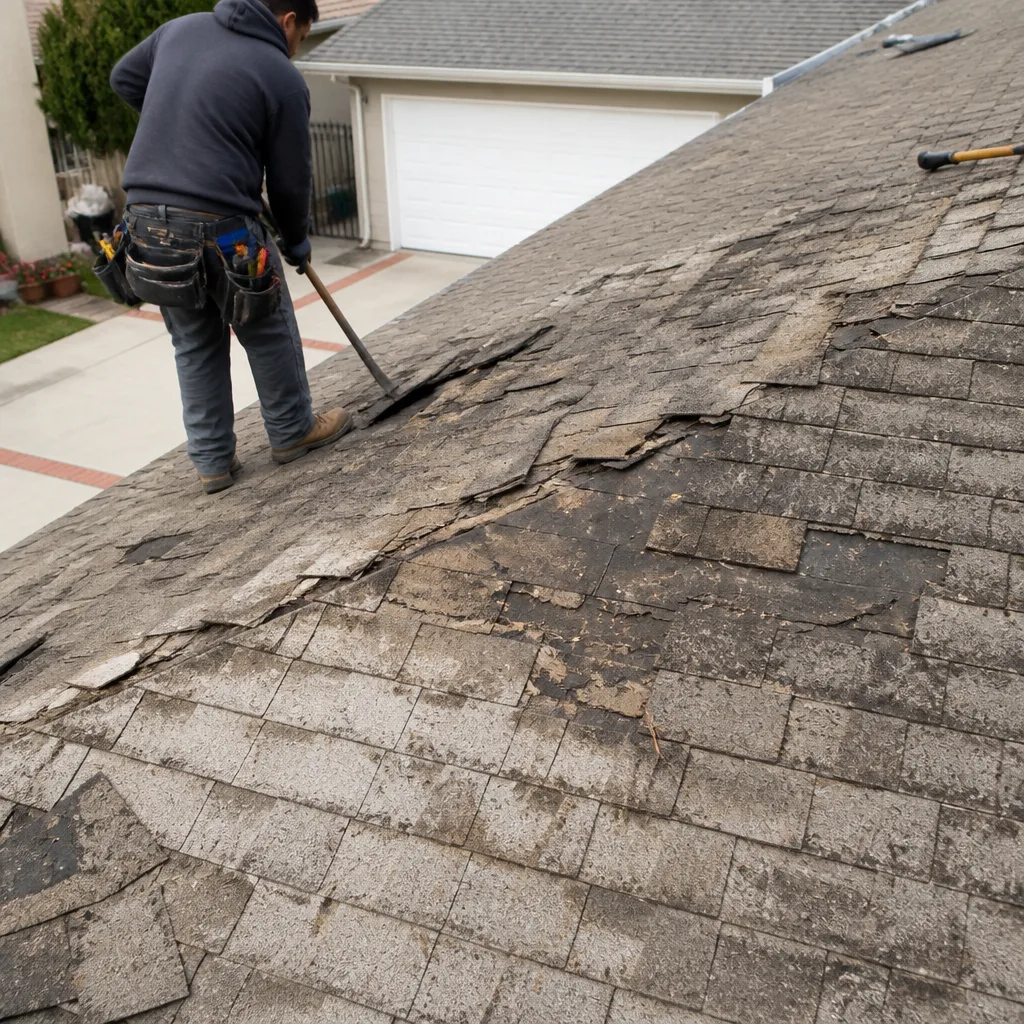
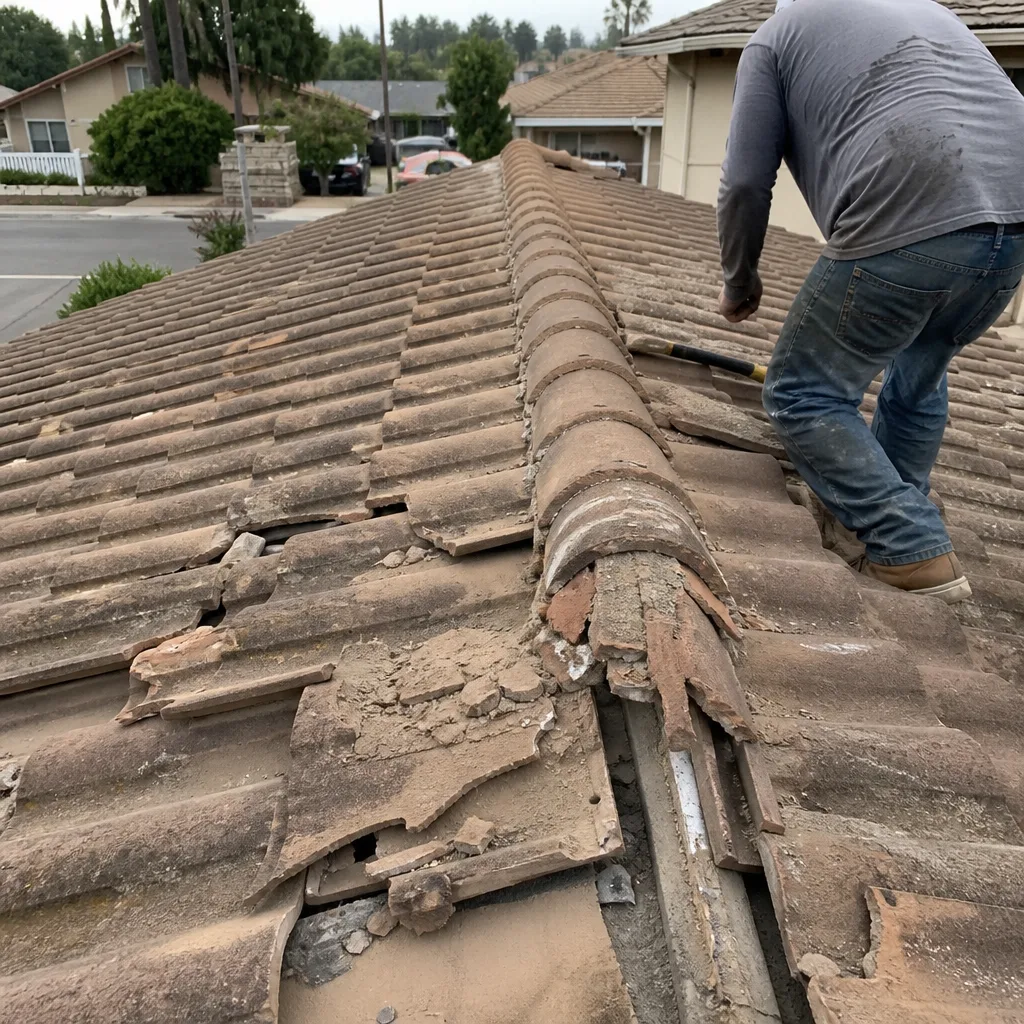
See the difference
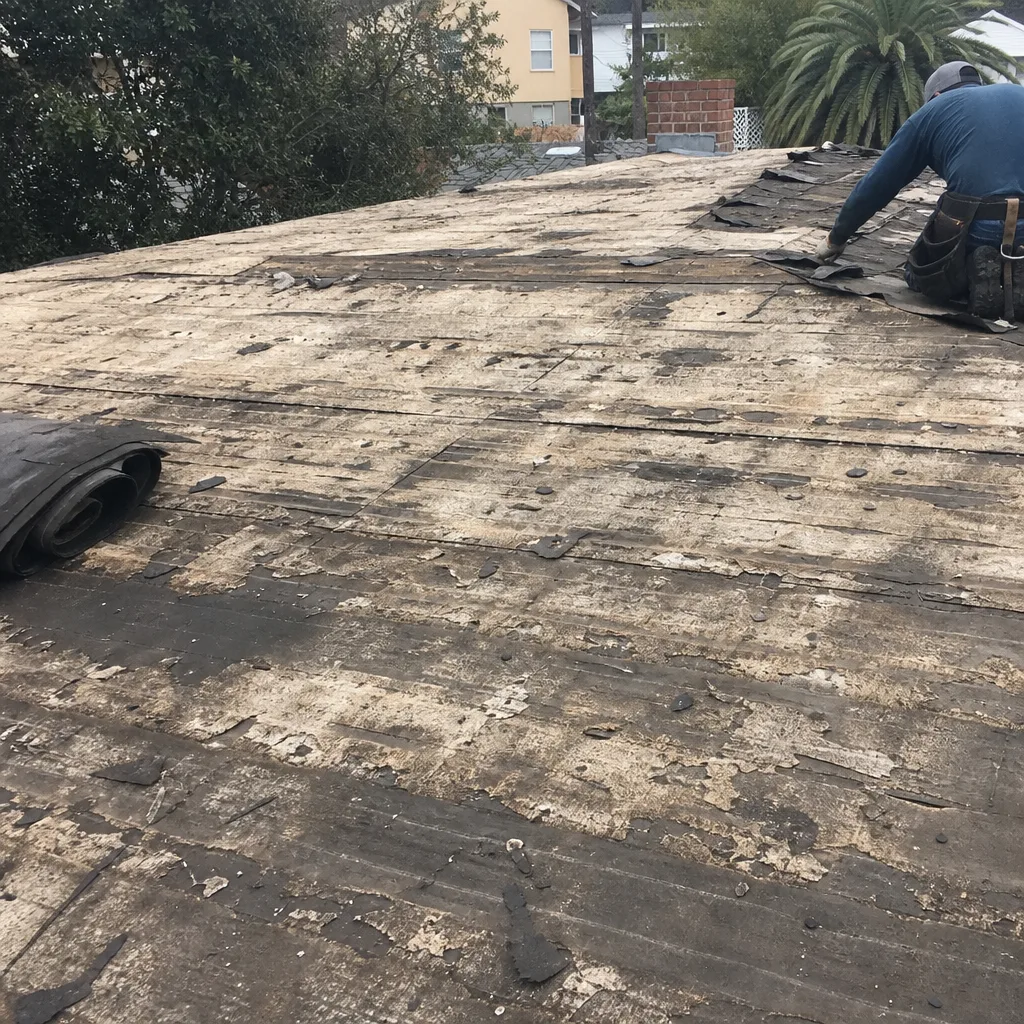 Before
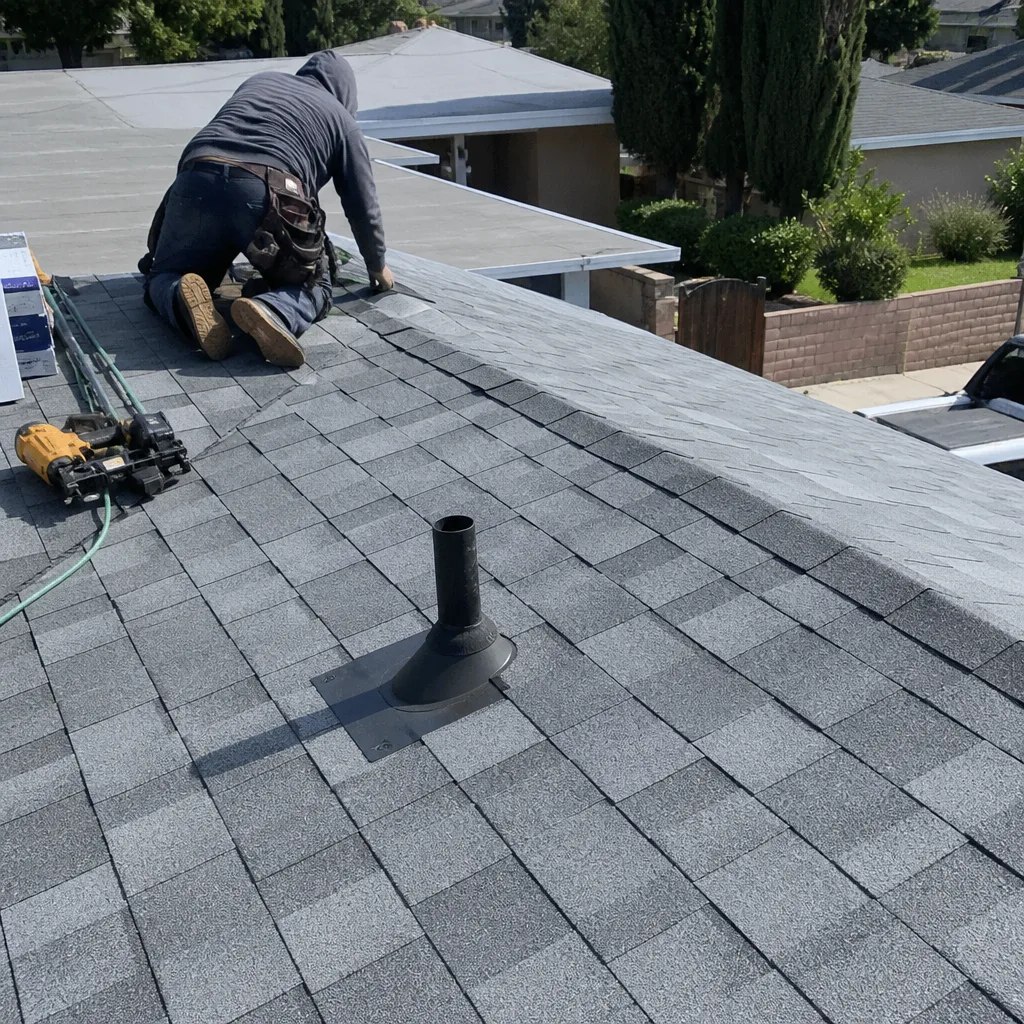 After
 Before
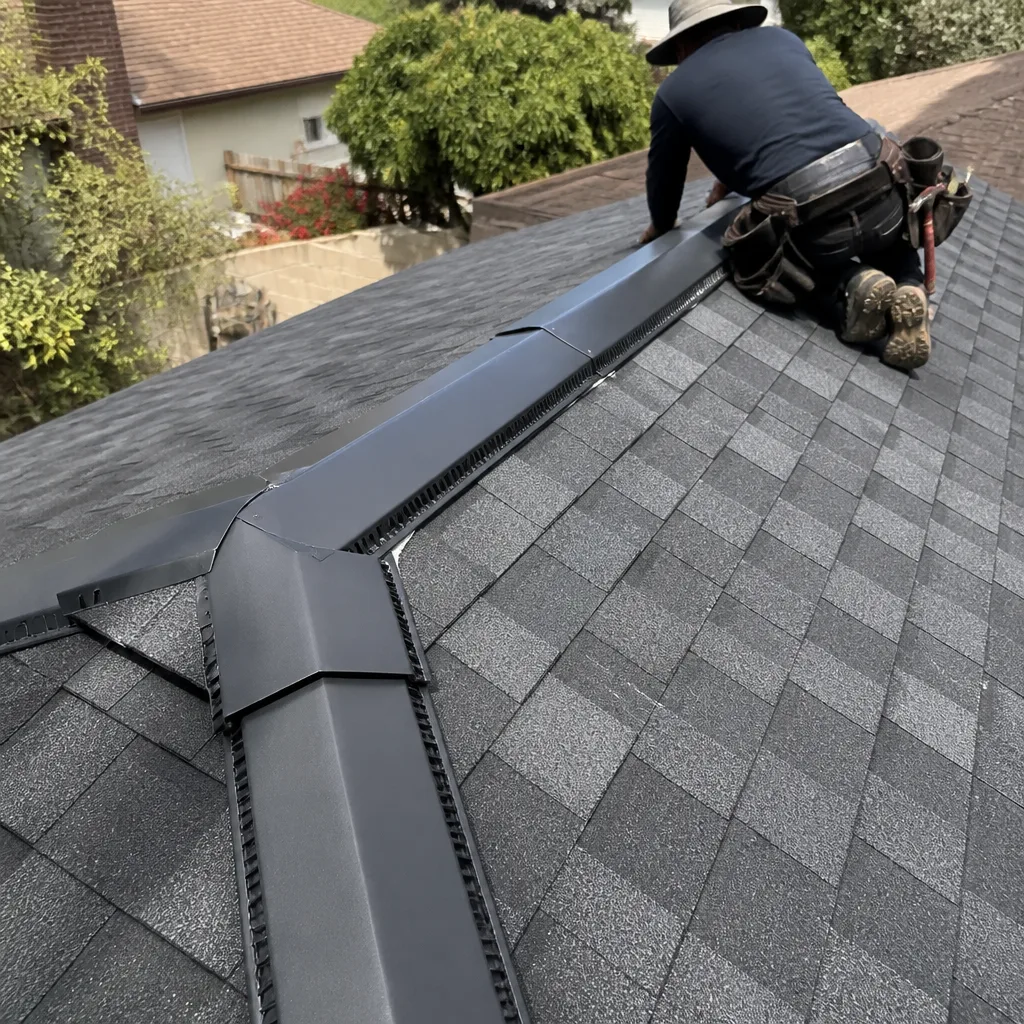 After
 Before
 After
When to Call a Professional
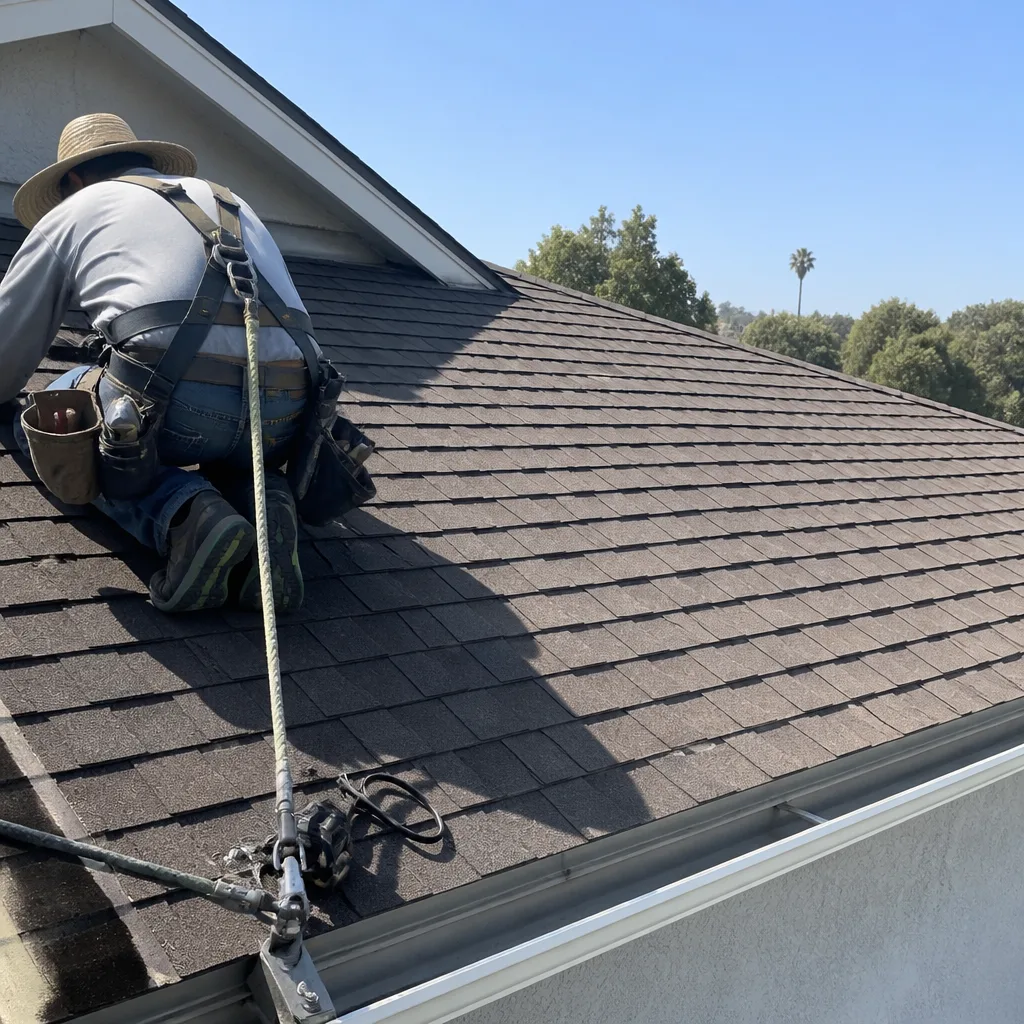
Some roofing issues are visible from the ground: missing shingles after wind, water stains on ceilings, granules collecting in gutters. Others are invisible without getting on the roof: underlayment failure under tile, rusted valley flashings, improper nailing patterns. If you notice any of the visible warning signs, or if your roof is over 15 years old in Glendale’s heat and you haven’t had it inspected, that’s the moment to bring in a specialist. Roof work at height carries real fall risk, and diagnosing hidden problems requires trained eyes and proper safety equipment. Weathervane Roof Repair offers free estimates in Glendale, call (877) 755-4274 to schedule yours. For more guides & resources, visit our blog. The inspection tells us what’s happening; the findings tell you what’s next, even if the answer is that your roof is fine.
Frequently Asked Questions
A new asphalt shingle roof on a typical 1,500 sq ft Glendale home runs between $9,000 and $16,000, while tile, metal, or structurally complex projects run higher. Fire zone compliance, tear-off requirements, and structural work all affect the final number. Call (877) 755-4274 for a free, line-item estimate based on your specific roof.
For most Glendale homes in fire zones, Class A architectural asphalt shingles from established manufacturers offer the best balance of cost, fire compliance, and service life, typically 18 to 28 years depending on slope orientation. Clay tile lasts longest and performs superbly in the heat, but the structural load requirement rules it out for some homes. The right answer depends on your fire zone, roof structure, and budget, not on any single material’s marketing.
Yes, most reroofing projects over 100 square feet in Glendale require a building permit from Glendale Building & Safety, and homes in Very High Fire Hazard Severity Zones also require plan review for fire-rated assemblies. Skipping the permit carries real risk: potential stop-work orders, failed inspections, insurance complications, and problems at resale.
Check your address on the LA County Fire Department’s Fire Hazard Severity Zone map, which is publicly available online and linked through Glendale’s planning portal. Your insurance company can also confirm your zone. The zone matters because it determines which roofing materials and assemblies are permitted on your home.
Tile roofs can often be repaired when the damage is limited to a few cracked tiles or a localized flashing issue, and repair is frequently the right call when the tile itself is still sound. The underlayment beneath the tile, however, does age and eventually requires replacement on a 25 to 35 year cycle, even if the tiles still look fine from the street.
A standard asphalt shingle reroof on a typical Glendale home takes 2 to 4 days of active work, while tile or metal projects run 1 to 2 weeks. The full project timeline includes permit processing (2 to 4 weeks), which happens before tear-off begins, and inspections, which occur during and after installation. Plan for the permit cycle when scheduling your project.
The Bottom Line
Roofing in Glendale is not the same as roofing anywhere else in Southern California. Your fire zone determines what materials you can use. The Verdugo Mountains determine how wind and sun age your roof and where it fails first. Your home’s structure may decide whether tile is even an option. The best thing you can do for your roof is understand these local factors before you sign anything, start with a real diagnostic inspection rather than a sales visit, and work with a roof-specific contractor who can navigate the city’s dual permit and fire code landscape. The roof over your head is the first thing Glendale’s weather hits. Treat it like the system it is.
Written by the team at Weathervane Roof Repair, serving Glendale since 2014.