
Last updated October 30, 2026
 Architectural shingles
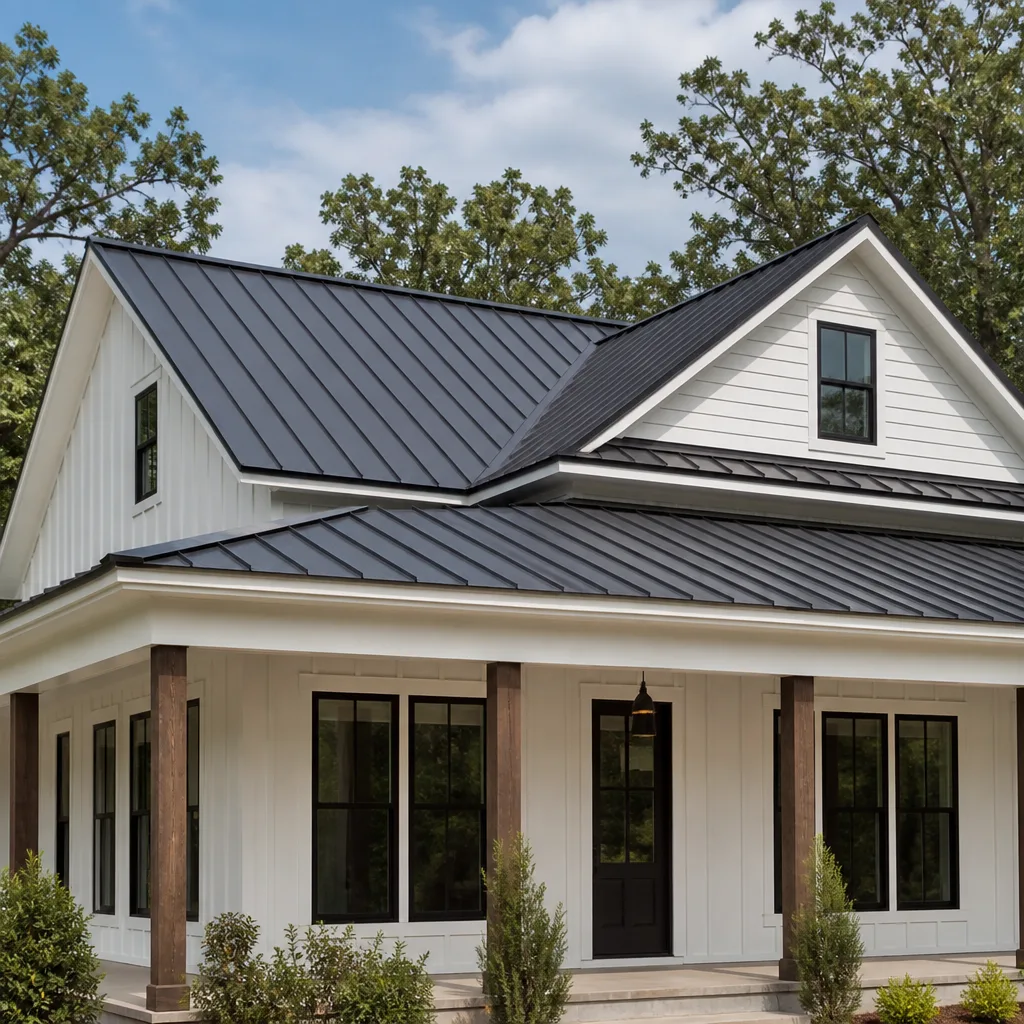 Metal roofing
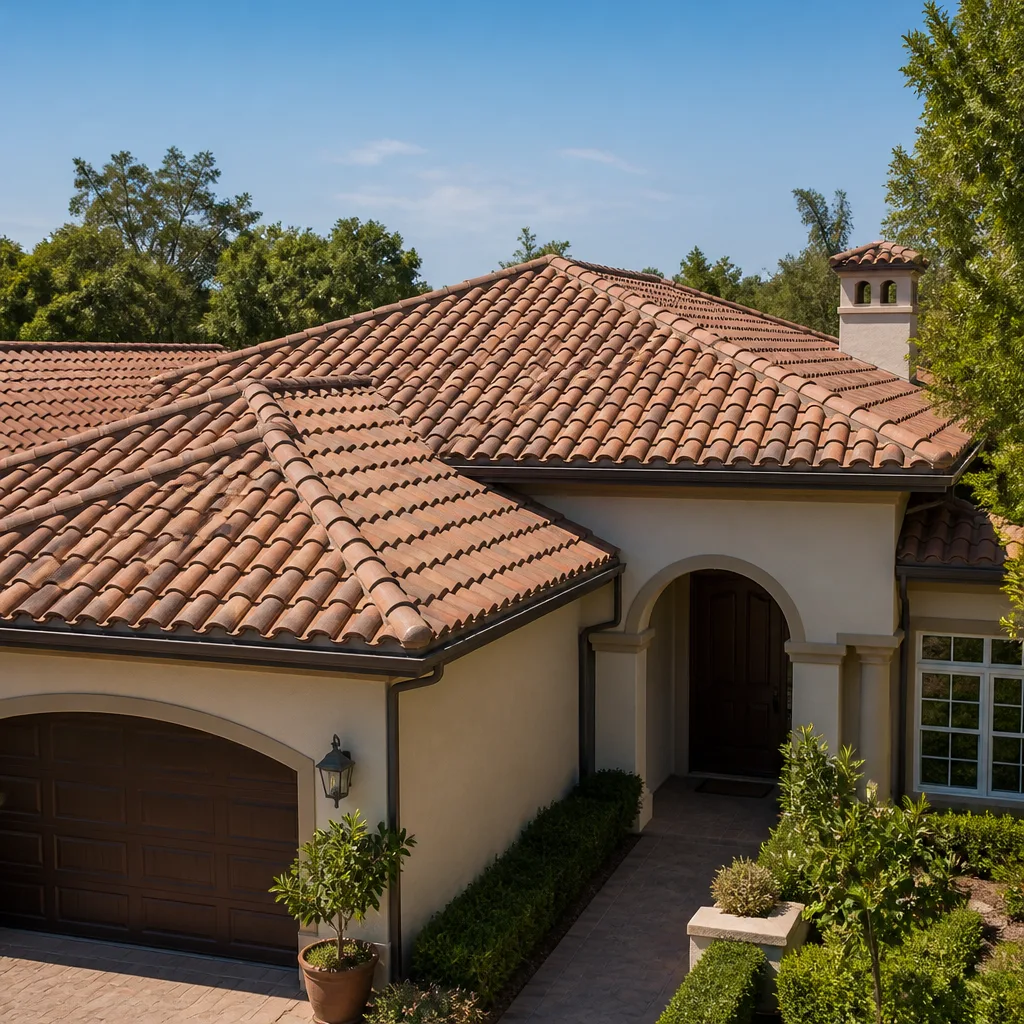 Tile roofing
 GAF
 Owens Corning
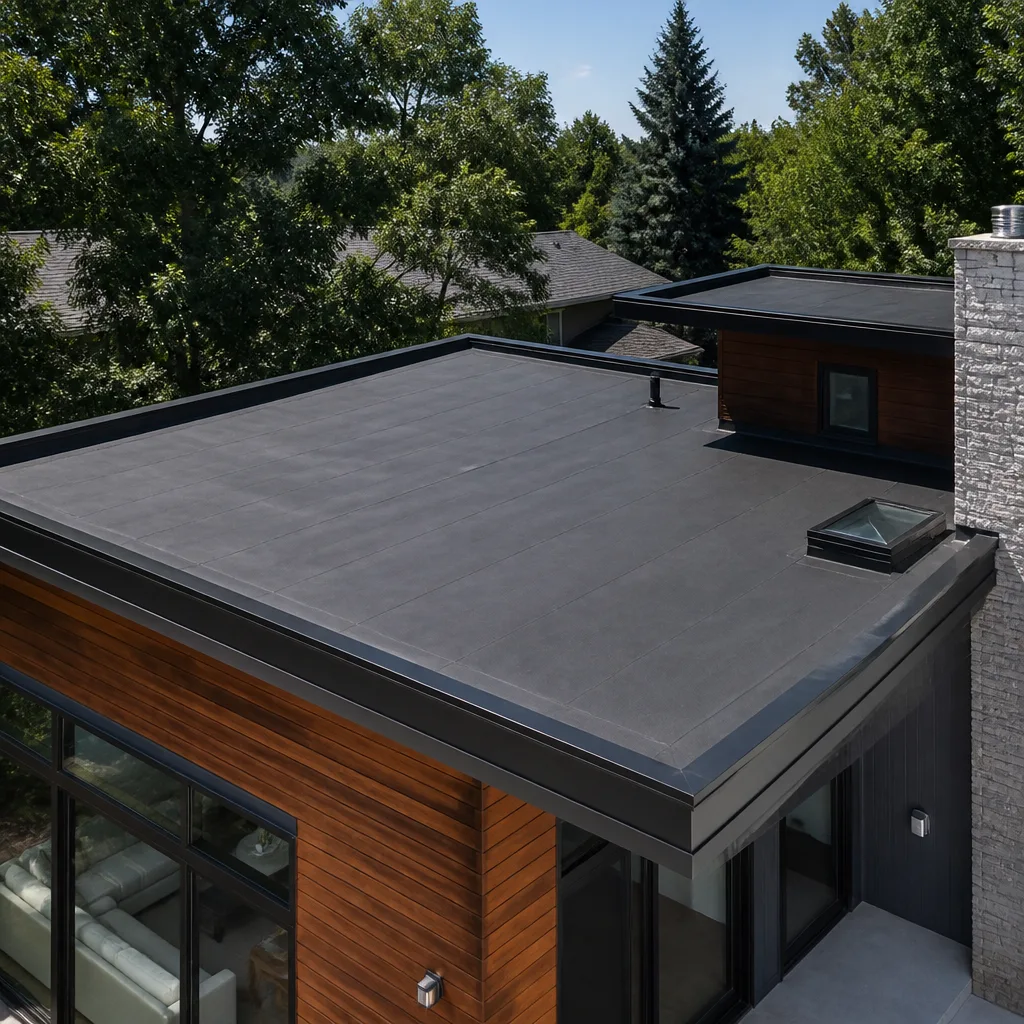 Flat & low-slope
Free roof inspection with deck photos before we talk money - GAF and Owens Corning certified installation
Roof Repair Troubleshooting: Common Problems and How to Fix Them
That brown ceiling stain directly under your bathroom? The leak is probably four feet uphill and two feet to the left. Water travels along rafters, insulation batts, and vapor barriers before it drips – and patching where it shows up is how repairs fail twice. The diagnostic logic is the part most homeowners never learn, so they end up paying for the same repair twice. In Glendale, where we get intense winter rain followed by long dry spells, leaks can sit hidden for months before showing themselves. That stain isn’t the problem. It’s the evidence. This guide teaches you to read it the way a roofing specialist does.
Styles & brands we work with
Quick Answer
Roof repair troubleshooting starts with tracing water back to its entry point, not patching where it appears. The five zones that cause roughly 80% of residential leaks are valleys, penetrations, step flashing, ridge caps, and low-slope transitions. Start by reading the stain’s shape and timing, then inspect the roof feature directly uphill from it before calling for Roof Repair services from a roof-only specialist.
Table of Contents
- The Diagnostic Logic: Water Never Travels in a Straight Line
- The Five Failure Zones Behind Most Roof Leaks
- What Granule Loss in Your Gutters Actually Tells You
- Condensation vs. Active Leak: Two Different Problems
- When It’s Not a Roof Problem at All
- Storm Damage in Glendale: What to Check After Heavy Rain
- Brand-Matched Repairs: Why Shingle Choice Matters
- Common Mistakes to Avoid
- When to Call a Professional
- Frequently Asked Questions
- The Bottom Line
The Diagnostic Logic: Water Never Travels in a Straight Line
Here’s the counterintuitive truth we’ve learned from thousands of roof inspections: the leak you see and the leak you have are rarely in the same place. Water enters through a small breach, then follows the path of least resistance. It runs along the top edge of a rafter. It pools in a low spot in the decking. It drips onto insulation, saturates it, and only then finds a seam in the drywall below. By the time you see the stain, the water has traveled anywhere from a few inches to fifteen feet from its entry point.
Reading the stain is the first diagnostic step. Here’s what to look for:
- Stain shape: A tight, dark ring with a lighter center usually means a slow, persistent drip – think a small flashing gap, not a torn shingle. A wide, diffuse stain that spreads along a ceiling seam suggests water is pooling above and soaking through broadly.
- Stain location relative to roof features: A stain near an exterior wall often traces back to step flashing where the roof meets the wall. A stain near a chimney points to counter-flashing. A stain under a valley points to valley metal or shingle overexposure.
- Timing: If the stain appears during the storm, the leak is close to the surface – shingles, flashing, or a penetration. If it appears two or three days after the rain stops, the water is traveling slowly through insulation or along a rafter, which means a longer path and a harder-to-find entry point.
In Glendale, our winter storms are the great leak revealers. The dry summer months hide roof problems because there’s no water to push through. Then the first real rain comes, and every undetected breach announces itself at once. That’s why we recommend a Roof Inspection in Glendale before the rainy season, not after the first ceiling stain appears.
The Five Failure Zones Behind Most Roof Leaks
Every roof has five zones that do the vast majority of the failing. These aren’t evenly distributed. You can have a 20-year-old roof with pristine field shingles and a valley that’s been leaking for two seasons. Understanding each zone’s signature symptom lets you narrow the search before you climb a ladder.
1. Valleys
Valleys are where two roof planes meet and channel water down. They handle more water per square foot than any other part of the roof, so they fail first. The symptom signature in Glendale is a stain on the ceiling near a window or along an exterior wall that shares a plane with the valley. If you have a leak that only appears in heavy rain, start here.
What goes wrong: Valley metal underneath the shingles can rust through, especially if debris sat in the valley and held moisture. Shingles can be overcut, exposing the valley liner. In older Glendale homes, we often find valley metal that was installed without a proper underlayment beneath it – a code violation that only shows up when water finds the seam.
The fix: A valley repair usually means replacing the metal, rebuilding the underlayment, and re-laying the shingles properly. It’s a narrow fix, not a full roof job, which is where a repair-first philosophy matters.
2. Penetrations
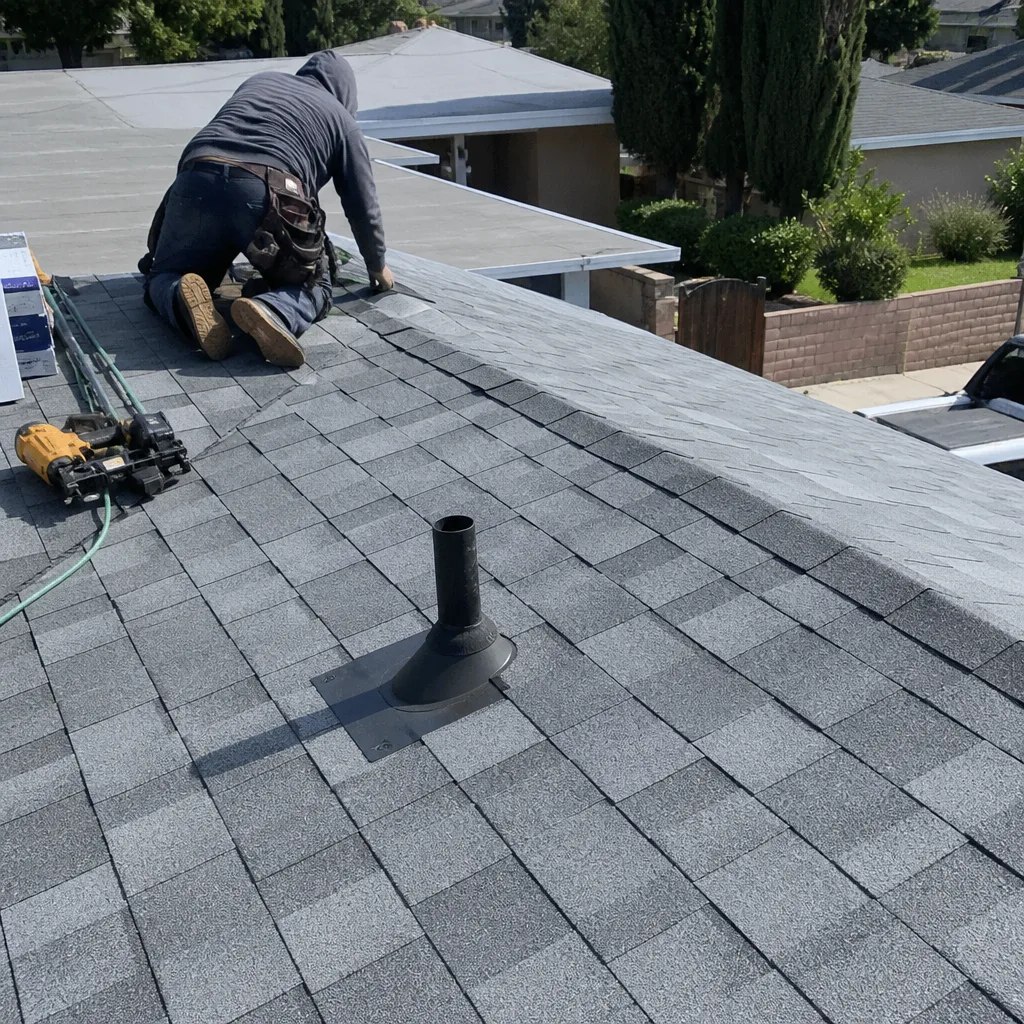
Any hole in the roof is a potential leak: vents, pipes, skylights, satellite mounts, solar panel stanchions. The rubber boot around a plumbing vent is a classic failure point. In the Glendale climate, the rubber dries out in the summer heat and cracks. Then the winter rain finds the crack.
Symptom signature: A stain that’s directly below a bathroom or kitchen vent pipe, or a dark spot on the ceiling near a skylight. These stains often appear during or immediately after rain because the path from breach to ceiling is short.
The fix: Replacing a vent boot is a small repair – typically under $300. Skylight flashing is more involved but still localized. The key is catching it before the decking rots, which turns a simple repair into a structural problem.
3. Step Flashing
Where a roof plane meets a vertical wall – a dormer, a chimney, the side of a second story – step flashing is what keeps water out. Each piece of flashing tucks under the shingle below and behind the siding above. When one piece fails, water follows it straight into the wall.
Symptom signature: Stains on the wall below a roof-wall intersection, peeling paint near the roofline, or soft drywall where the ceiling meets the wall. In Glendale homes with stucco exteriors, the water often runs behind the stucco and shows up as a crack or bulge before it ever reaches the interior.
The fix: Step flashing repair requires pulling the shingles and the siding in the affected section, replacing the flashing, and re-installing both. It’s technical work – done wrong, it leaks worse than before.
4. Ridge Caps
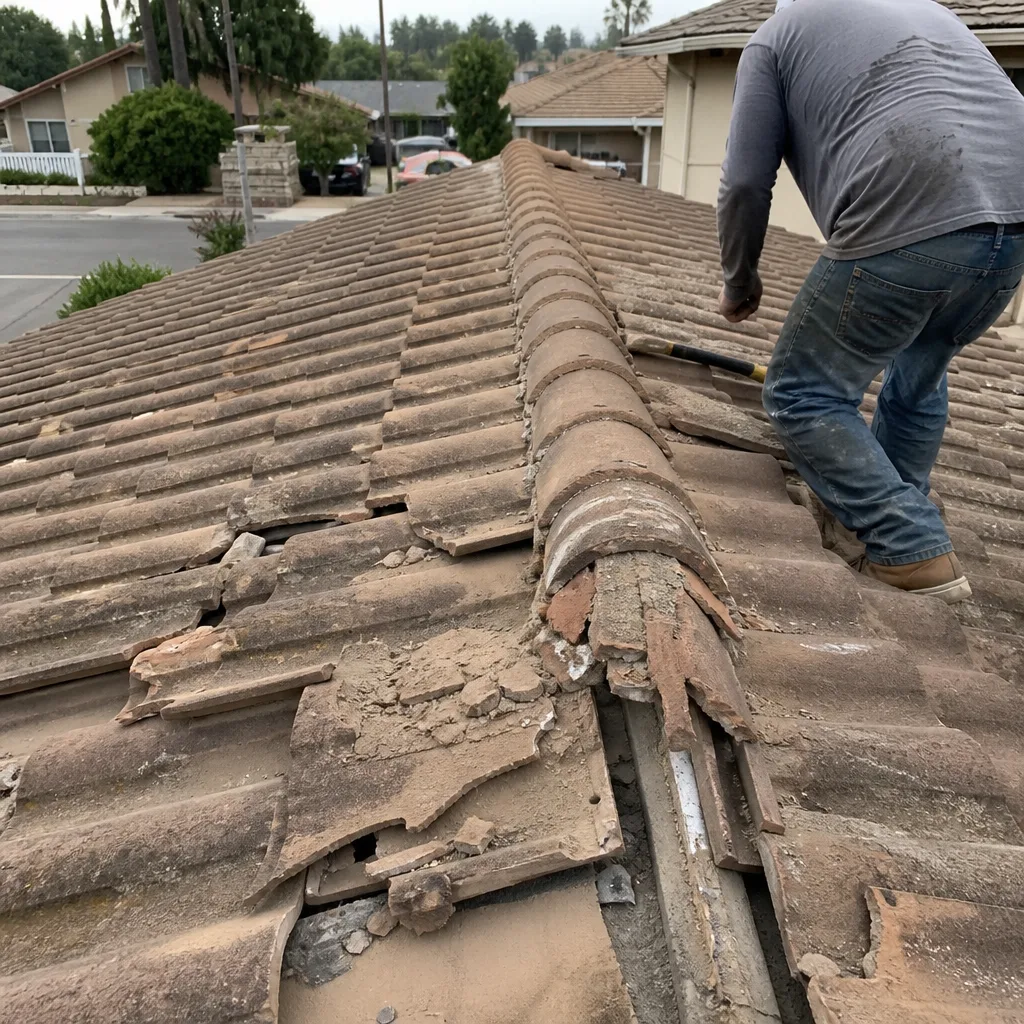
The ridge is the highest point of the roof, and the cap shingles that cover it take the brunt of wind exposure. In a hot climate like Glendale, the ridge caps also age faster because they sit at the hottest point of the roof, baking in the sun every day.
Symptom signature: Ridge cap failure rarely causes a leak directly – water at the peak tends to run down and out. The real symptom is finding cap shingles in your yard after a wind event, or seeing them lifted and cracked from the ground.
The fix: Ridge caps are replaced as a unit. It’s an inexpensive repair – usually a few hundred dollars – but skipping it lets water into the peak, where it travels down the rafters and appears as a ceiling stain in the middle of the room, far from any visible source.
5. Low-Slope Transitions
Every roof that isn’t pure steep pitch has a low-slope section: over a porch, an addition, a carport, or the space where two roof lines converge. These areas don’t shed water fast enough for standard shingles, so they need a different material – modified bitumen, roll roofing, or a membrane. When someone shingled over a low-slope section, it leaks. Guaranteed.
Symptom signature: Stains on the ceiling of a porch or addition, peeling paint on the underside of an overhang, or visible water pooling on the roof after rain.
The fix: Low-slope sections need to be re-covered with the right material. This is a common repair in Glendale, where mid-century homes often have flat-roof additions that were never flashed properly where they meet the main roof.
What Granule Loss in Your Gutters Actually Tells You
Clean your gutters once a year and you’ll find granules – the small, sand-like ceramic particles that coat asphalt shingles. Finding some is normal, especially after a new roof’s first year. But the pattern of granule loss is a diagnostic tool, not just a nuisance.
Here’s how to read it:
- Which downspout is the granule pile closest to? The shingles above that section of gutter are the ones losing granules. Compare downspouts. If one has a thick pile and another has almost none, the first section is aging faster.
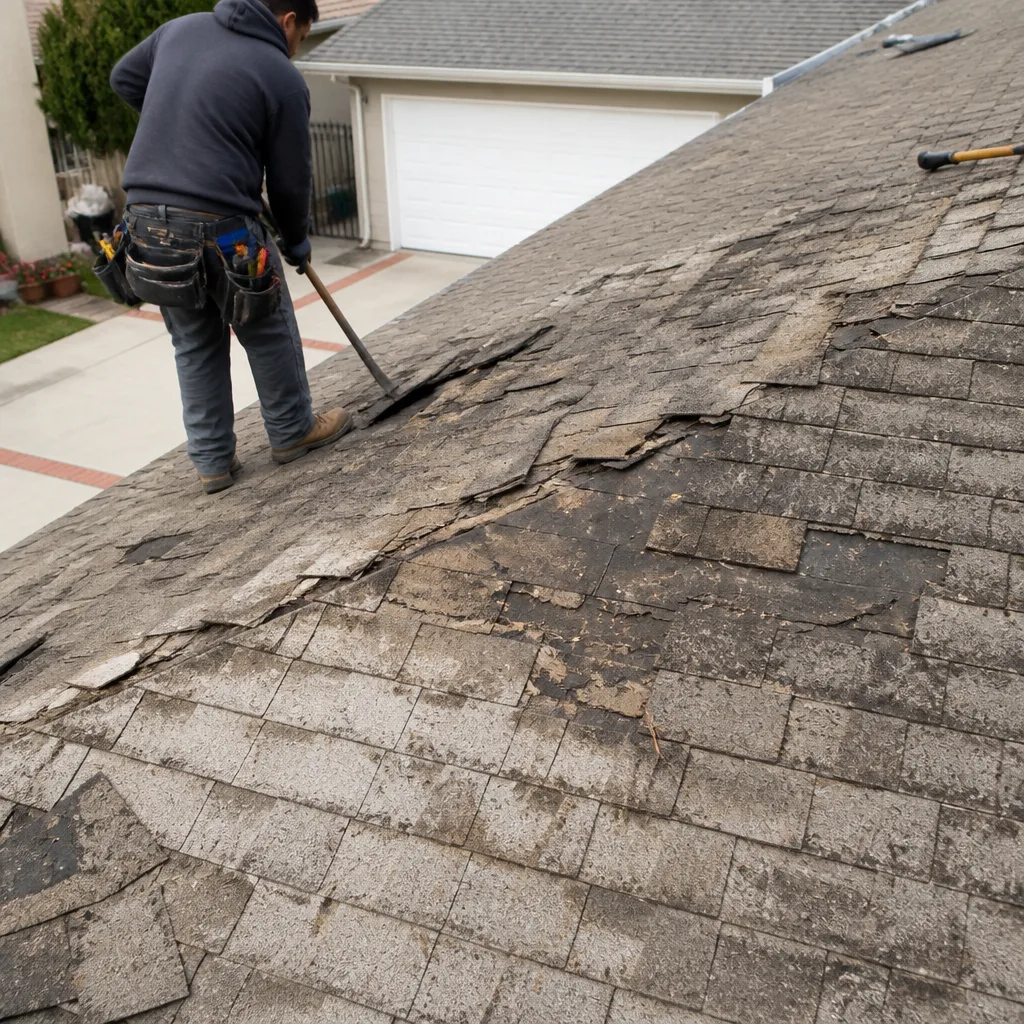
- What do the shingles look like from the ground? Look at the roof plane that drains to that downspout. If you see patchy gray areas where the dark asphalt is missing, that section is in thermal shock – the Glendale heat cycle is cooking the shingles and they’re losing their UV protection.
- What does the shingle surface feel like? This one requires getting on the roof or hiring someone who will. Granules that come off easily under light finger pressure mean the shingle has lost its bond and is nearing the end of its service life. Granules that stay put mean the loss is normal weathering.
Granule loss by zone matters more than total granule loss. A roof may have another eight years of life in the shade-facing planes and three years in the west-facing plane. We’ve seen roofs in Glendale where the west side is baked bare and the north side looks nearly new. That’s the honest answer a repair specialist gives when a salesperson would push a full Roof Replacement in Glendale – and it’s why we recommend brand-matched repairs for section-level problems. A GAF shingle patch on one slope and an Owens Corning patch on another is a good repair. A full replacement is not always the right call.
Condensation vs. Active Leak: Two Different Problems
This one confuses homeowners constantly. You see water staining on the underside of your roof deck, or a damp patch that never quite dries in winter, and you assume the roof is leaking. But condensation damage and active leak damage are two entirely different problems with two entirely different fixes.
Condensation damage forms when warm, moist air from inside the house rises into the attic and hits the cold underside of the roof deck. The moisture condenses on the wood, soaks in over time, and creates dark, even staining. The pattern is diffuse – broad areas of discoloration with no clear point of origin. It gets worse in winter because the temperature difference between inside and outside is greatest.
Active leak damage follows a path. You’ll see a dark streak or a line of rot following a seam, a rafter, or a joint. The staining is concentrated along a specific route. It worsens only after rain.
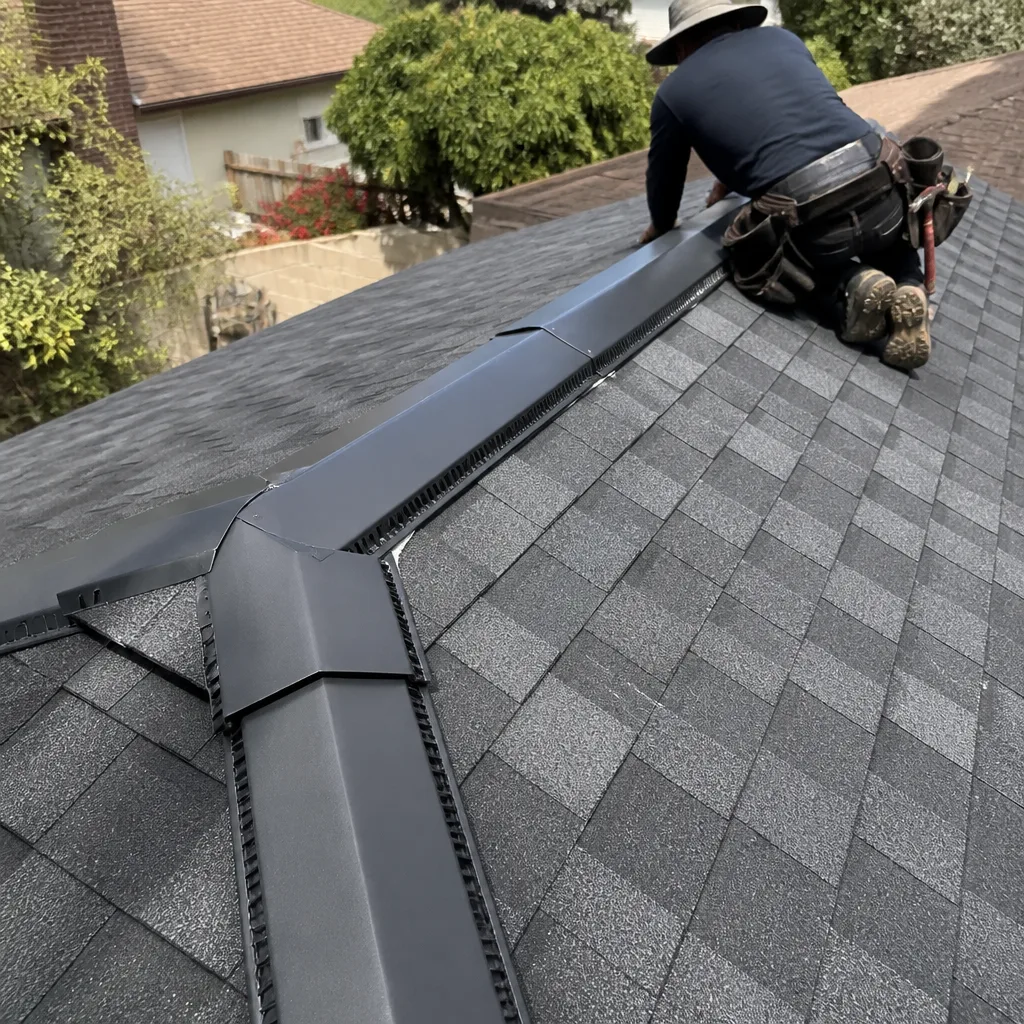
The fix for condensation is ventilation, not roof repair. Installing soffit vents, ridge vents, or a powered attic fan changes the airflow so moisture doesn’t accumulate. A roof repair will do nothing for a condensation problem – and a ventilation fix will do nothing for a roof leak. In Glendale, where winter nights can drop into the 40s and homes are often sealed tight against summer heat, condensation is common. We include a ventilation check in every Roof Inspection in Glendale because the two problems often look identical from inside the attic.
How we distinguish them on inspection: We look at the underside of the decking at the peak versus the eaves. Condensation concentrates near the peak where warm air rises. Leak damage follows water paths from the penetration or flashing point downhill. And we check the insulation – condensation often leaves a dirty, darkened layer on top of the insulation where dust has been trapped by repeated wetting, while a leak leaves a defined channel.
When It’s Not a Roof Problem at All
About 25% of the “roof leaks” we get called for in Glendale aren’t roof leaks. They’re one of three other problems presenting with roof symptoms. Calling a roofer for these wastes a trip or – worse – leads to a wrong repair that doesn’t fix anything.
The Flashing Problem That Isn’t a Roof Problem
Sometimes the flashing is fine and the gap is elsewhere. The classic case: a leak near a window on an upper floor that runs down inside the wall and appears on the ceiling below. The window was installed without proper flashing, or the exterior stucco has cracked, and water is entering behind the window frame. From inside, it looks like the roof is leaking because the stain is on the ceiling. The roofer checks the roof, finds nothing, and the homeowner is told there’s no problem. There is a problem. It’s just not the roof.
The Gutter Problem
Clogged or improperly pitched gutters overflow. The water runs down the fascia, behind the gutter, and down the exterior wall. If it finds a gap at the top of the wall, it enters. The stain on the ceiling looks like a roof leak, but the fix is cleaning the gutters or re-pitching them. In Glendale, where oak leaves and eucalyptus debris clog gutters all year, this is the single most common “roof leak” that isn’t.
The Ventilation Problem
We covered condensation above, but there’s a second ventilation-driven issue: moisture trapped under a too-tight attic that’s cooking the shingles from below. Asphalt shingles need to shed heat. When the attic overheats because there’s no exhaust, the shingle backs bake, the adhesive layer degrades, and the shingles curl or blister. From the ground, it looks like the roof is failing. The fix is airflow, often combined with replacing the heat-damaged section.
Each of these has a distinct diagnostic path. The roofing specialist’s job is to separate “the roof is leaking” from “water is entering the house” – they overlap, but they’re not the same call.
Storm Damage in Glendale: What to Check After Heavy Rain
Glendale doesn’t get hurricanes, but the Santa Ana wind events in fall and the heavy rain events in winter do real damage. Here’s what we tell homeowners to check after a storm, in order of urgency:
- Shingle tabs on the ground. After a wind event, walk your yard and your neighbor’s. If you find shingle tabs, they came from somewhere. Look up. The ripped shingle left a bare spot that will leak in the next rain.
- Ridge caps lifted or missing. Wind hits the ridge first. If caps are lifted, water can enter at the peak and run down through the whole roof.
- Flashing bent or pulled. Strong wind can curl step flashing or chimney flashing back. Look for shiny metal edges that weren’t visible before.
- Pooling water on low-slope sections. After heavy rain, check your porch or addition roof from a window. Standing water that doesn’t drain within 48 hours means a clogged drain or a sagging deck.
- Interior stains that appeared after the storm. Small, sharp-edged stains that show up within hours of rain usually trace to a specific breach. Big, diffuse stains that appear days later suggest water traveled a long path.
In our experience, the wind damage in Glendale is often invisible from the ground. Shingles that look fine from the sidewalk are actually unsealed – the wind broke the adhesive bond without tearing the shingle off. The next wind event will take them. That’s what inspections catch: the damage that hasn’t failed yet.
Brand-Matched Repairs: Why Shingle Choice Matters
When you repair a section of shingles, the new material has to match the existing roof. It’s not about aesthetics alone – although a mismatched patch looks like exactly what it is. It’s about nail placement, exposure height, and material compatibility.
We work with seven major shingle brands – including GAF, CertainTeed, Owens Corning, IKO, Atlas, Tamko, and Boral – because Glendale roofs come with all of them. A homeowner with a CertainTeed Landmark roof doesn’t need a roofer who only stocks GAF. The patch should be the same brand, the same color family, and the same profile. That’s how you get a repair that blends in and performs like the original.
Here’s what brand-matched repair means in practice, using Tamko as an example. Tamko shingles have a specific exposure height and nail strip location. A different brand’s shingle won’t align on the same exposure, which means the roofer either fudges the reveal (creating an inconsistent water-shedding surface) or re-cuts the shingle (voiding the manufacturer’s wind warranty). The same applies across GAF, Atlas, and Boral. Each brand has its own profile.
The takeaway: ask your roofer which brands they actually stock and install. If the answer is “whatever’s at the supply house that day,” your repair is a lottery ticket. A specialist with brand-specific experience tells you what you have, what matches, and what it’ll cost before the first nail goes in.
Common Mistakes to Avoid
- Patching the ceiling before finding the leak. The stain is evidence. Once you paint over it, you lose the diagnostic trail and the next leak takes longer to find. In Glendale’s dry season, that means the leak can run hidden for six months behind fresh paint.
- Re-caulking a flashing seam that’s in the wrong place. If water is entering behind the flashing, the caulk on the front edge does nothing. The water just goes around it. The fix is re-cutting the flashing, not caulking the visible seam.
- Ignoring granule loss because the roof “looks fine from the street.” From the curb, a failing roof can look perfectly good. The granules are coming off the back side. The real diagnostic work happens from close up.
- Calling a general contractor for a roof leak. A general contractor is fine for many things. Roof diagnostics is a specialty. The roofer who looks at 300 roofs a year in Glendale sees patterns a GC who does two roofs a year won’t catch.
- Waiting until the rainy season to schedule an inspection. Glendale’s dry months are the best time to find and fix roof problems. No water pressure means the roofer has to read the physical evidence instead of chasing active drips, and the repair is done before the next rain. Waiting until November means competing for an appointment while the storm is already coming.
- Replacing the entire roof when one section is failing. Section failures happen. A roof can have a failed valley and another decade of life in the field shingles. A repair-first specialist saves you that decade. A sales-first company doesn’t.
When to Call a Professional
Some roof problems are DIY-able – cleaning gutters, resetting a popped nail, replacing a single blown-off shingle on a low roof. Most of the diagnostics in this guide fall on the other side of that line, though you can find more guides & resources on our blog. If the leak requires walking on the roof, you’re better off hiring someone who does it every day. If the problem traces to flashing, valleys, or a low-slope transition, that’s technical work with a high failure rate when done wrong. And if you’re not sure what you’re looking at – that’s exactly what inspections are for.
Weathervane Roof Repair offers free estimates in Glendale – call (877) 755-4274 and we’ll give you a straight answer on what your roof actually needs, whether that’s a small repair or a full roof replacement.
Frequently Asked Questions
Start at the stain and trace uphill to the nearest roof feature: a valley, vent, chimney, wall intersection, or low-slope transition. The leak’s entry point is almost always uphill from where the stain appears, often by several feet. In Glendale’s dry months, you may need to look for physical evidence – rusted flashing, cracked boots, granule loss – rather than active water.
Most common roof repairs in Glendale run between $300 and $1,800 depending on the zone. A vent boot replacement is usually under $300. Step flashing repair typically runs $500 to $1,200 per wall. A valley rebuild or low-slope re-cover can run $1,200 to $3,500 depending on size. A full roof replacement is a different scale entirely. Call (877) 755-4274 for an exact quote – estimates are free.
No. Water that enters the roof doesn’t sit still. It saturates decking, rots framing, and feeds mold. In Glendale, a leak that starts in November and waits until March has had four months of wet-weather cycles to spread into the structure. A $400 repair in November becomes a $4,000 repair in spring.
Condensation creates broad, diffuse staining concentrated near the attic peak and worsens only in cold weather. A leak creates a defined path of staining that follows a rafter, a seam, or a flashing point and worsens only after rain. Condensation is fixed with ventilation; a leak is fixed at the entry point on the roof.
Some granule loss is normal, especially in the first year. The diagnostic signal is the pattern: which gutter has the pile, how fast it’s growing, and whether the shingles above it show patchy gray spots. In Glendale, west-facing slopes lose granules faster from heat exposure. If the loss is zone-specific and advancing, that section needs replacement sooner than the rest of the roof.
Yes – we offer free estimates throughout Glendale and the surrounding area. We’ll inspect the roof, tell you what’s actually wrong in plain language, and give you a line-item quote for exactly what the repair requires. Call (877) 755-4274 to schedule.
The Bottom Line
Roof troubleshooting is a diagnostic discipline, not a checklist. The leak you see is almost never the leak you have. Water travels, sections age at different rates, and symptoms masquerade – a condensation stain can look like a leak, a gutter overflow can look like a flashing failure, and a ceiling stain can trace back to a valley fifteen feet away. At Weathervane Roof Repair, we start every job with the same assumption: the roof will tell us what’s wrong if we read it carefully enough. Call (877) 755-4274 for a free estimate in Glendale, and we’ll tell you exactly what your roof needs – and what it doesn’t.
Written by the team at Weathervane Roof Repair, serving Glendale since 2014.
See the difference
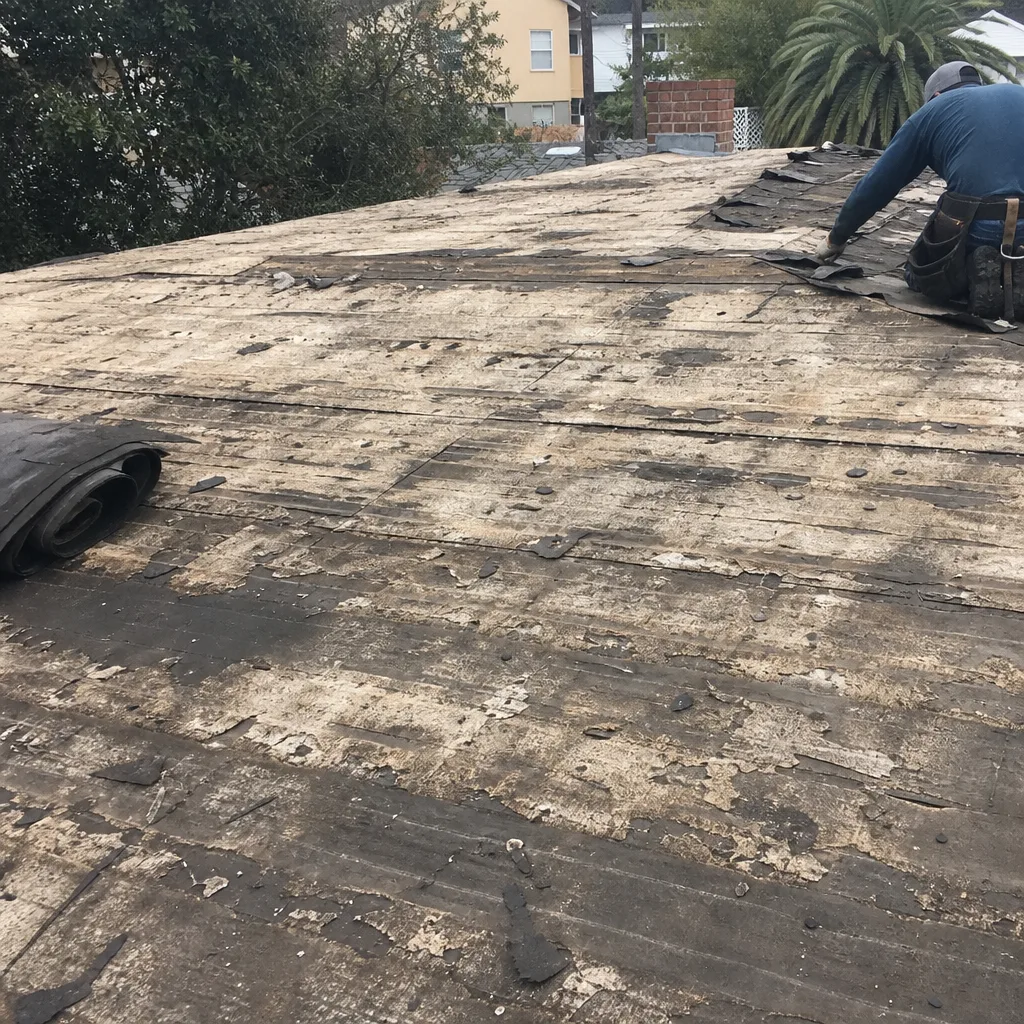 Before
 After
 Before
 After
 Before
 After