
Last updated October 30, 2026
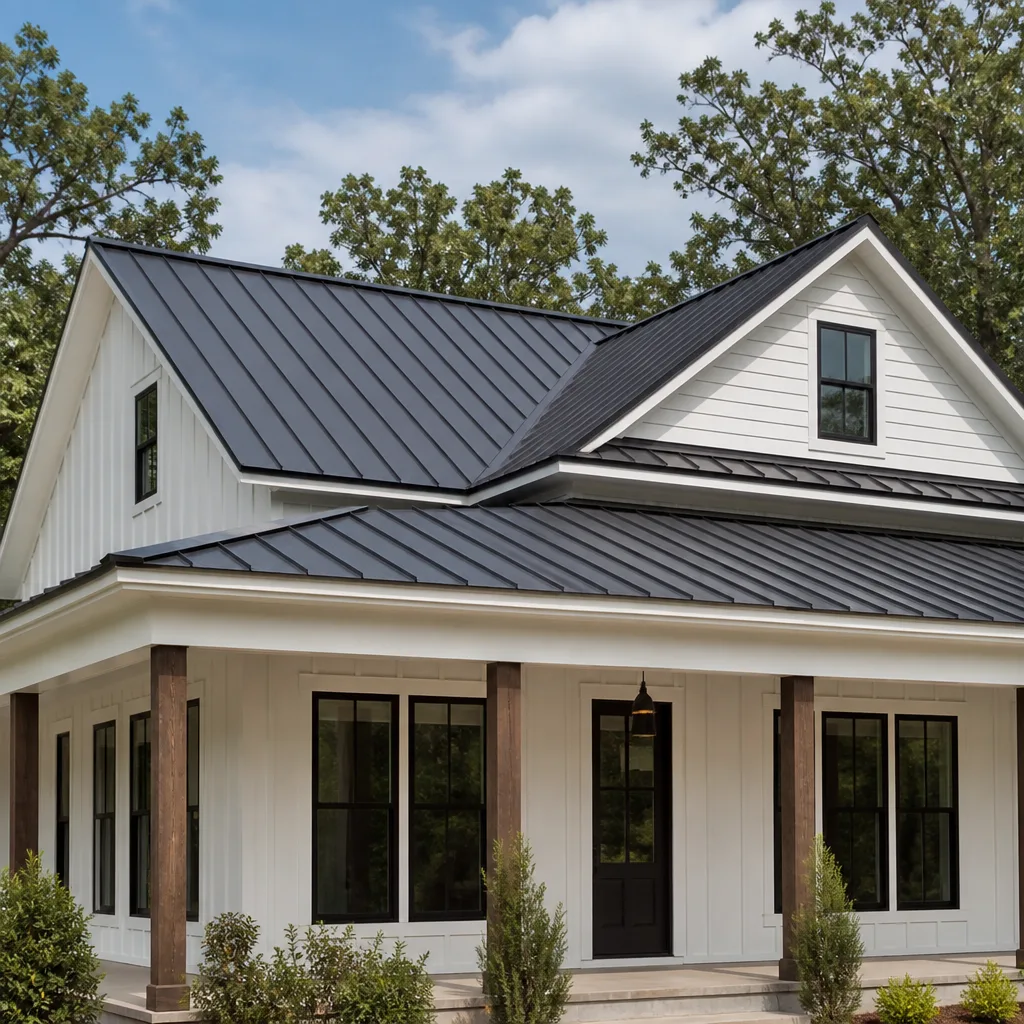 Metal roofing
 Architectural shingles
 Tile roofing
 GAF
 Owens Corning
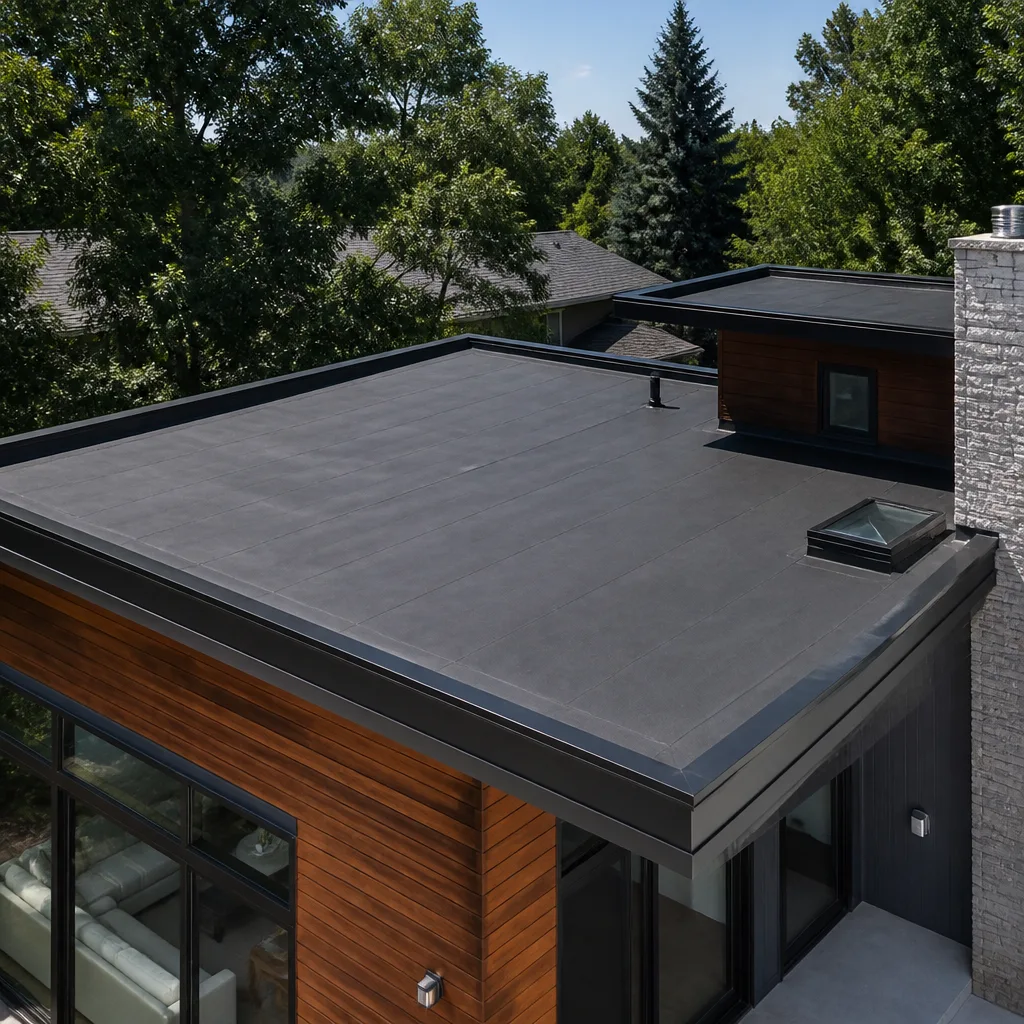 Flat & low-slope
Free roof inspection with deck photos before we talk money - GAF and Owens Corning certified installation
Roofing Warning Signs: A Glendale Homeowner’s Reference Guide
A dark stain spreading across your ceiling is not the problem. It’s the receipt for a problem that started somewhere else, often weeks earlier, and on a Glendale home with a tile roof, the stain’s location almost never matches the entry point. Water that enters at a cracked field tile near the ridge can travel along the underlayment, follow a rafter, and finally drip onto your ceiling fifteen feet away from where it got in. This guide is organized around Glendale-specific failure sequences, so you can identify the upstream cause before the downstream evidence gets expensive. We’ll walk through what actually fails on roofs in this climate, what those failures look like from the ground, and which signs mean a $500 repair versus which ones mean the roof has entered irreversible decline.
Styles & brands we work with
Quick Answer
The most reliable early warning signs of roof trouble on a Glendale home are granule loss collecting in gutters, lifted or displaced tile corners visible from an upper window, rust bleeding at wall flashing transitions, and ceiling stains that appear weeks after rain rather than during it. A roof inspection is the only way to confirm whether these signs point to an isolated repair or systemic decline, and in Glendale’s hot, dry climate with seasonal Santa Ana winds, annual visual checks catch most failures before they reach the ceiling.
Table of Contents
- Why Ceiling Stain Location Lies to You on a Glendale Tile Roof
- Santa Ana Wind Damage: Signs You Can’t See From the Street
- Granule Loss in Gutters: How to Read the Timeline
- Flashing Failure on Stucco: Glendale’s Most Overlooked Leak Source
- Repair vs. Irreversible Decline: The Distinction That Saves You $12,000
- Glendale Building Codes: What Your Roof Must Meet
- What a Proper Roof Inspection Covers
- Common Mistakes to Avoid
- When to Call a Professional
- Frequently Asked Questions
- The Bottom Line
Why Ceiling Stain Location Lies to You on a Glendale Tile Roof
Here’s the sequence we see repeatedly in Glendale: a homeowner notices a brownish ring on the ceiling of a bedroom, checks the roof directly above that spot, finds nothing wrong, and waits. Then the next rain comes, the stain grows, and now there’s peeling paint and a musty smell. The actual entry point was never above the stain. It was higher up the roof plane, where water found a crack, a nail pop, or a deteriorated section of underlayment, and traveled laterally before gravity pulled it down onto the ceiling.
On a low-slope tile roof, which describes many homes in neighborhoods like Rossmoyne and Verdugo Woodlands, water behaves differently than on a steep asphalt shingle roof. Tile roofs rely on an underlayment system beneath the tiles to do the actual waterproofing. The tiles shed the bulk of the water, but the underlayment catches what gets past them. When that underlayment ages, cracks, or was installed imperfectly, water runs between the tile and the underlayment until it finds a seam, a fastener hole, or a low spot. Then it penetrates, and from there it follows the path of least resistance, which is rarely a straight line down.
What this means for you: a ceiling stain on the north side of a room does not mean the roof problem is on the north side of that room’s ceiling area. It might be ten feet up the roof plane. It might be coming from a chimney cricket on the opposite slope. It might be traveling along a rafter that runs the length of the house. The stain location alone is nearly useless as a diagnostic tool, and any contractor who promises to fix “the leak above the stain” without walking the entire roof is guessing.
If you’re seeing a new ceiling stain on a tile roof in Glendale, the move is not to poke a hole in the drywall or patch the stain. The move is to get a Roof Inspection in Glendale that traces the water path back to the actual penetration point. We start every inspection looking at the roof as a whole system, not a spot above the symptom.
Santa Ana Wind Damage: Signs You Can’t See From the Street
Glendale sits in a wind corridor. When Santa Ana winds push through the Verdugo Mountains and down across the foothill neighborhoods, roofs take a beating that looks different from storm damage in coastal cities. Santa Anas don’t bring rain. They bring sustained dry gusts that lift tile edges, scour away granules, and displace ridge caps. And because there’s no storm to photograph, the damage often goes unnoticed until the winter rains arrive and water finds the gaps.
Here’s what Santa Ana wind damage looks like on a concrete tile roof, and why most of it is invisible from the street:
- Lifted tile corners – When wind gets under the leading edge of a concrete tile, it can lever the tile upward just enough to break the mechanical lock. From the ground, the tile looks fine. From an upper window or the roof itself, you’ll see corners raised a quarter to half inch above the surrounding tiles. That gap is enough for wind-driven rain to blow directly onto the underlayment.
- Displaced ridge caps – The ridge is where wind pressure concentrates. After a strong Santa Ana event, ridge cap tiles can shift laterally, opening gaps at the mortar joints. Once one cap shifts, the next wind event pressures the adjacent caps, and the failure progresses down the ridge line. A displaced ridge cap is a repair that costs a few hundred dollars. A ridge failure that’s been left alone for two seasons is a leak waiting for the first heavy rain.
- Broken field tiles that don’t show from below – Concrete tile can crack under impact (a fallen palm frond, a thrown branch) or under foot traffic from a previous repair. The crack often runs along the tile’s channel, invisible from the street because the tile above it overlaps. But water finds that crack. A single broken field tile can let water onto the underlayment every time it rains.
- Wind-scoured granule loss – On homes with asphalt shingles, Santa Anas strip away the protective granules on the windward slopes first. You’ll see bare patches, shiny spots, or an uneven color pattern when looking at the roof from the correct angle. This is localized wear that accelerates shingle aging on one side of the house while the other side looks nearly new.
The frustrating part for homeowners is that all of this can be happening without a single visible sign from the ground. You won’t see a lifted tile corner from your driveway. You won’t notice a shifted ridge cap from the sidewalk. This is why we recommend a visual inspection after every significant Santa Ana event, especially if you live in a foothill neighborhood like La Crescenta, Montrose, or the upper reaches of Glenoaks Canyon. The damage is there. It just doesn’t announce itself until the rain does.
If you’ve been through a wind event and want to know what it did to your roof, a Roof Inspection in Glendale is the straightforward way to find out. We walk the entire roof, document what we find, and tell you what actually needs fixing versus what can wait.
Granule Loss in Gutters: How to Read the Timeline
Every asphalt shingle roof sheds granules. That’s normal. Shingles are manufactured with excess granules, and they slough off during installation, during the first few heat cycles, and gradually over the roof’s life. The question is never “are there granules in my gutters?” The question is “how many, how fast, and how old is the roof?”
Glendale’s climate accelerates granule loss in a specific way. Our summers produce sustained roof surface temperatures well above 120 degrees. The asphalt layer in a shingle expands and contracts with every day-night cycle, and over years, the bond between the granules and the asphalt weakens. When Santa Ana winds arrive in the fall, they strip away granules that were already loosened by summer heat. So a Glendale homeowner often sees a sudden granule dump in the gutters after the first wind event of the season, not because the roof suddenly failed, but because the wind finished a process the heat started.
Here’s how to read granule loss as a timeline:
- Light, sporadic granules on a roof under 10 years old – Normal. Installation shedding and early heat-cycle release. Nothing to do.
- Consistent granule accumulation at gutter low points on a 10-15 year old roof – The roof is entering its second half of life. This is the time to start watching more carefully. Check for uneven wear on sun-exposed slopes, which in Glendale means the south and west faces take the brunt.
- Heavy granule loss before the roof is 15 years old – This is a red flag. It suggests either an under-ventilation problem (the attic is cooking the shingles from below), a manufacturing defect in the shingle itself, or a roof that was installed with materials not suited to Glendale’s heat. A roof shedding granules this early is aging at roughly twice the normal rate. An inspection will tell you which cause applies.
- Granules so thick in the gutter that they form a layer, on a roof over 20 years old – The shingles have given up most of their UV protection. The asphalt layer is now exposed in patches, which means the shingles are entering end-of-life. This is the stage where you’re deciding between targeted repair and replacement, not whether the roof is healthy.
One thing to know if you’re looking at granules in your gutters: the brand matters less than the installation and the ventilation. We work with shingles from Owens Corning, IKO, Atlas, and Tamko, among others, and every one of these manufacturers produces a product that can last 20-plus years in Glendale’s climate if the roof system around it is correct. When we see premature granule loss, the shingle is rarely the sole culprit. It’s usually the attic ventilation, a failed reflective barrier, or a slope orientation the original installer didn’t account for.
Granule loss on its own doesn’t mean you need a new roof. It means you need to know whether the rate of loss is normal for your roof’s age and exposure. That’s a diagnosis, not a sales pitch.
Flashing Failure on Stucco: Glendale’s Most Overlooked Leak Source
Glendale’s housing stock leans heavily toward stucco exteriors. Stucco looks seamless and monolithic, but it’s actually a system of layers that creates specific challenges where the roof meets the walls. The flashing at these transitions, where roof plane meets vertical stucco wall, is where a large share of Glendale roof leaks actually begin. Not in the field of the roof. At the edges.
Here’s what flashing failure looks like on a stucco home, and what to look for:
- Rust bleeding at wall transitions – Headwall flashing, the metal that runs where a roof plane dies into a stucco wall above it, is typically galvanized steel. When the galvanic coating breaks down, which happens faster in Glendale’s dry heat followed by winter rain, the steel rusts. Rust streaks running down the stucco from the roofline are not a cosmetic issue. They’re a sign that the flashing metal is oxidizing, which means it’s thinning, which means pinholes are next. Once a pinhole forms in headwall flashing, water gets behind the stucco and travels down inside the wall cavity. The first sign indoors is usually peeling paint at the top of an interior wall, not a ceiling stain.
- Separating counter-flashing on chimney crickets – A chimney cricket is the small peaked structure built on the uphill side of a chimney to divert water around it. In Glendale, where many homes have masonry chimneys rising through tile roofs, the cricket and its flashing are failure points. The counter-flashing, which is the metal that laps over the base flashing, can separate from the chimney masonry over time as the house settles and the masonry expands and contracts. You’ll see a visible gap between the metal and the brick, or the metal will be pulling away from the chimney face. Water running down the chimney enters that gap and follows the masonry down into the roof system.
- Step flashing pulled away at side walls – Where a sloped roof meets a vertical stucco wall, step flashing is installed in overlapping pieces. Each piece should be covered by the stucco finish. When the stucco develops hairline cracks at the roofline, or when the flashing pieces shift, rain water gets behind the flashing instead of being directed down the roof. This failure is slow and often invisible, but it rots roof decking over the course of several seasons before the leak shows indoors.
- Skylight and vent pipe flashing gaps – Flashing around skylights and plumbing vent pipes is another common Glendale failure point. The rubber boots on vent pipes dry out, crack, and pull away from the pipe after years of direct sun. Skylight flashing, especially on older installations, can fail at the soldered corners. Both of these are small leaks that become big ones because they sit directly above attic insulation, which hides the water until it has soaked through.
Here’s the thing about flashing: it’s almost always repairable. A rusting headwall flashing does not mean you need a new roof. A separating cricket counter-flashing does not mean your tiles are failing. Flashing repairs are localized, targeted, and in most cases cost a few hundred dollars, not several thousand. A contractor who sees rust bleed at a wall transition and immediately recommends full replacement is either not looking carefully or not telling you the truth. The honest read is: flashing fails predictably on Glendale stucco homes, and it’s fixable when caught before the surrounding roof structure absorbs water damage.
If you’re seeing any of these flashing warning signs, the right move is a Roof Repair in Glendale quote from a specialist who will go up, identify the specific flashing failure, and fix that joint, not sell you the whole roof.
Repair vs. Irreversible Decline: The Distinction That Saves You $12,000
The roofing industry has a dirty open secret: there’s no incentive for a replacement-motivated contractor to tell you that your roof needs $800 in repairs. The commission on a full replacement is too large. So warning signs get framed as “the beginning of the end” when in reality, many of them are isolated failures on a roof that otherwise has years left.
Here’s the distinction a specialist makes, and it’s one you can make too with a little framework:
Signs that indicate repair:
- Localized granule loss on one slope or one section of shingles, while the rest of the roof retains its granular surface.
- A single displaced ridge cap or a small number of cracked field tiles, with no evidence of widespread tile breakage.
- Rust at one flashing location, with the rest of the flashings intact and sound.
- A ceiling stain that appears once, in one place, after a specific storm, and doesn’t grow during subsequent rains.
- Nail pops or raised fasteners in a small, isolated area.
- One or two shingles that have blown off, with the surrounding shingles still well-sealed.
Signs that indicate irreversible decline:
- Granule loss across all roof slopes uniformly, exposing asphalt in broad patches, regardless of orientation.
- Tile breakage distributed across the entire roof, where every section shows multiple cracked tiles and walking the roof produces the sound of shifting tiles underfoot.
- Flashing failures at every wall transition, chimney, and penetration, indicating the entire flashing system has aged out simultaneously.
- Ceiling stains appearing in multiple rooms after every rain, at different times, suggesting water is entering at several points.
- The underlayment itself is visible through gaps or cracks in the tiles, and it’s brittle, torn, or disintegrating when touched.
- An asphalt shingle roof where the shingles no longer lay flat, with edges curling and cupping across the entire roof surface.
The repair vs. decline determination is not a guess. It’s a systematic evaluation of the whole roof, and it’s exactly what a proper inspection delivers. We tell homeowners what the roof actually needs, and we’ve talked more than a few of them out of a replacement they didn’t need. It’s not hard to do if you’re honest: you walk the roof, you look at the flashings, you check the underlayment where accessible, you read the granule loss, and you report what’s real.
The seven brands we work with, GAF, CertainTeed, Owens Corning, IKO, Atlas, Tamko, and Boral, all make products that perform well in Glendale’s climate when installed correctly. But no brand, no material, overcomes a roof that has reached systemic end-of-life. When we tell a homeowner that replacement is warranted, it’s because the evidence is indisputable across the entire roof, not because the repair budget looked small enough to push past.
Roof Replacement in Glendale is a decision you make when the roof has told you, through multiple warning signs in multiple locations, that it’s done. Not before.
Glendale Building Codes: What Your Roof Must Meet
Glendale has specific roofing requirements that affect how you interpret warning signs and what your repair or replacement must include. The city follows the California Building Code with local amendments, and it enforces them through the Glendale Building and Safety Division. If you’re doing a roof project in Glendale, here’s what applies:
A roofing permit is required for any roof replacement and for most repairs that involve the removal of a certain square footage of roofing material. The permit process includes plan review for structural loading, which on tile roofs means the existing framing must be verified to support the weight of the tile system. This is relevant to warning signs because what looks like a simple tile replacement can become a structural issue if the roof was originally built for a lighter material.
Glendale’s climate zone demands specific underlayment standards. The city requires a Class A fire-rated roof assembly in most residential zones, which has direct implications for underlayment selection and tile or shingle compatibility. If you’re seeing signs of underlayment failure, which manifest as leaks without visible tile or shingle damage, the fix involves removing the tile in the affected section, replacing the underlayment with code-compliant material, and reinstalling the tile. This is a repair, but it’s a repair that requires a permit and an inspection.
One practical note: Glendale’s Building and Safety Division reviews roofing permits with an eye toward solar compatibility, since a large percentage of Glendale homes either have solar or will get it. If your roof is showing signs of decline and you’re planning solar within the next five years, the timeline matters. Installing solar on a roof that’s five years from replacement means paying to remove and reinstall the panels when the roof goes. The smarter sequence is roof first, solar second, and a replacement decision that accounts for that timeline.
We handle permits and inspections as part of our roof work, which means the code compliance burden is ours, not yours. But it’s useful to know that Glendale takes roof standards seriously, and a cheap repair that skips the permit process is a liability you don’t want.
What a Proper Roof Inspection Covers
A roof inspection in Glendale is a systematic examination from the top down. Here’s what a real inspection includes, because there’s a wide gap between “I looked at your roof from the street” and an actual diagnostic assessment:
- Field inspection – Walking the entire roof surface (where safe and accessible), checking every slope for cracked tiles, lifted corners, missing shingles, nail pops, and general material condition. On tile roofs, this includes tapping tiles to identify hidden fractures that show no visible crack line.
- Flashing inspection – Checking every flashing location: headwalls, side walls, chimneys, crickets, skylights, vent pipes, valleys. Look for rust, separation, gaps, deteriorated sealant, and missing counter-flashing. This is where most Glendale leaks originate.
- Underlayment assessment – Where accessible, examining the underlayment for brittleness, tears, and deterioration. On tile roofs with accessible eaves or rake edges, the underlayment condition at the roof edges is a reliable proxy for the rest of the roof’s underlayment.
- Attic inspection – Going into the attic with a light, checking the underside of the roof decking for water stains, mold, rot, or daylight coming through. The attic tells the truth about leaks that have never reached the ceiling, and about ventilation problems that shorten shingle life.
- Ventilation evaluation – Checking that intake and exhaust ventilation are present, unblocked, and balanced. Glendale’s heat makes this critical: an unventilated attic cooks shingles from below and leads to premature granule loss and curling.
- Gutter and fascia check – Looking at gutters for granule accumulation, checking fascia boards for rot, and verifying that water is being directed away from the foundation. Gutters that fail at the roofline send water into the wall, not just onto the ground.
- Documented findings – A proper inspection ends with a written report, photographs, and a prioritized list of what needs attention now, what can wait, and what the overall roof health outlook is. No verbal “your roof is fine” without the documentation to back it up.
Roof Inspection in Glendale is offered as a standalone service for a reason: you should be able to get an honest assessment without being cornered into a replacement pitch. We do inspections for homeowners who want to know where they stand, and we document what we find. If the roof needs nothing, we say so. If it needs a repair, we quote the repair. If it needs replacement, we’ll show you the evidence.
Common Mistakes to Avoid
- Patching a ceiling stain before finding the source. You haven’t fixed the leak. You’ve hidden the evidence while the water keeps doing its work inside the roof assembly. The stain will return, and by then, the damage will be worse.
- Assuming a tile roof is leak-proof because the tiles look fine. Tiles shed water, but the underlayment waterproofs the roof. Underlayment ages, and once it fails, leaks happen through tile that looks completely intact from the ground.
- Ignoring granule loss because “all roofs shed granules.” All roofs shed some granules. Heavily, prematurely, or uniformly is a diagnostic signal, not background noise. Read the timeline, and don’t dismiss a meaningful change.
- Treating Santa Ana wind events as non-events because there’s no rain. Wind is the damage agent that opens the door. Rain is just the thing that walks through it. An inspection after a strong wind event catches displacement before the winter rain turns it into a leak.
- Getting a “roof quote” without an inspection. Any contractor who quotes a repair or replacement without walking the roof and documenting findings is guessing. A quote without diagnosis means you’re paying for their guess.
- Replacing a roof because one flashing is rusting. A rusted headwall flashing is a localized repair. It does not mean the roof is done. Get a second opinion before converting a hundreds-dollar repair into a five-figure replacement.
- Delaying a repair because “it’s just a small stain.” Small leaks become structural problems when they soak roof decking, rafters, and insulation over months and years. A small stain is the cheapest moment to fix the problem. Every month of delay increases the repair cost.
When to Call a Professional
Call a professional when you see a ceiling stain that doesn’t correspond to a visible roof issue above it, when a Santa Ana event has passed through and you want to know what it moved, when granule loss in your gutters has accelerated noticeably, when rust is streaking your stucco at the roofline, or when you see multiple warning signs that together suggest the roof is in decline. You should also call before you buy or sell a home with a roof older than 15 years, and before you schedule solar installation on a roof you haven’t had assessed.
The answer is always the inspection first, and we make that easy. Weathervane Roof Repair offers free estimates in Glendale, call (877) 755-4274 to schedule your free estimate. We’ll walk the roof, document the findings, and tell you exactly what your roof needs, and what it doesn’t.
Frequently Asked Questions
Most Glendale roof repairs range from $400 to $1,800 depending on what’s failing. A single cracked tile replacement runs $150 to $300. A displaced ridge cap reset runs $200 to $400. Flashing repair at a chimney or wall transition runs $450 to $1,200 depending on access and material. Underlayment repair on a tile roof, which requires lifting tile, replacing underlayment, and reinstalling tile, typically runs $1,000 to $2,500 for a localized section. The exact number depends on what we find, and we give written line-item estimates after inspection, not before. Call (877) 755-4274 for a specific quote, estimates are free.
No, not from us. We quote fixed prices from a documented inspection. The only thing that changes a price is discovering hidden damage that could not have been seen until the roof was opened up, and even then, we stop and show you before proceeding. We don’t do change orders on the back of a surprise, and we don’t lowball the estimate to win the work.
Yes. Roof repairs and replacements in Glendale that require a permit are handled by us, including the plan submittal and the inspections with the Glendale Building and Safety Division. You don’t need to navigate the city’s permit process yourself.
A concrete tile roof with a well-installed underlayment system can last 40 to 50 years for the tile, with underlayment replacement typically needed once at the 20 to 30 year mark. An asphalt shingle roof in Glendale’s heat typically lasts 18 to 25 years with proper ventilation. These ranges shift based on sun exposure, ventilation, installation quality, and how promptly repairs have been handled.
You can spot some signs from the ground: rust streaks at flashing, missing tiles, shingle edges that are curling, granule-heavy gutters. But the damage that matters in Glendale, lifted tile corners, hidden cracks, underlayment decay, attic-side water stains, is not visible from the ground. A professional inspection covers what you can’t see without being on the roof and in the attic.
Once a year, ideally in the late fall before the rainy season arrives, and after any significant Santa Ana wind event that produces sustained gusts above 40 mph. Glendale’s pattern of hot summers, fall winds, and winter rain means the roof takes its abuse in a predictable sequence. An annual inspection catches the damage before the rain exploits it.
It means the underlayment has failed beneath intact tile. This is common on Glendale tile roofs between year 20 and year 30, when the original underlayment has aged out but the tile above it remains serviceable. The fix is lifting the tile in the affected section, replacing the underlayment, and reinstalling the tile. It’s a repair, not a replacement, and it preserves the tile that still has decades of life left.
The Bottom Line
Roofing warning signs in Glendale are best read as a sequence, not a list. The stain on your ceiling is the last chapter, not the first. The earlier chapters show up as granule loss in gutters, lifted tile corners after wind events, rust at stucco transitions, and separating flashings at chimneys. When you read these signs early, most of what they indicate is repairable at a manageable cost. When you ignore them, they accumulate into a roof that has quietly entered irreversible decline. The honest answer to “repair or replace?” comes from a systematic inspection, not from a contractor’s incentive to sell. For a free estimate from a specialist who will tell you the straight truth, call (877) 755-4274. Start with the inspection. The findings will tell you exactly what to do next.
Written by the team at Weathervane Roof Repair, serving Glendale since 2014.
See the difference
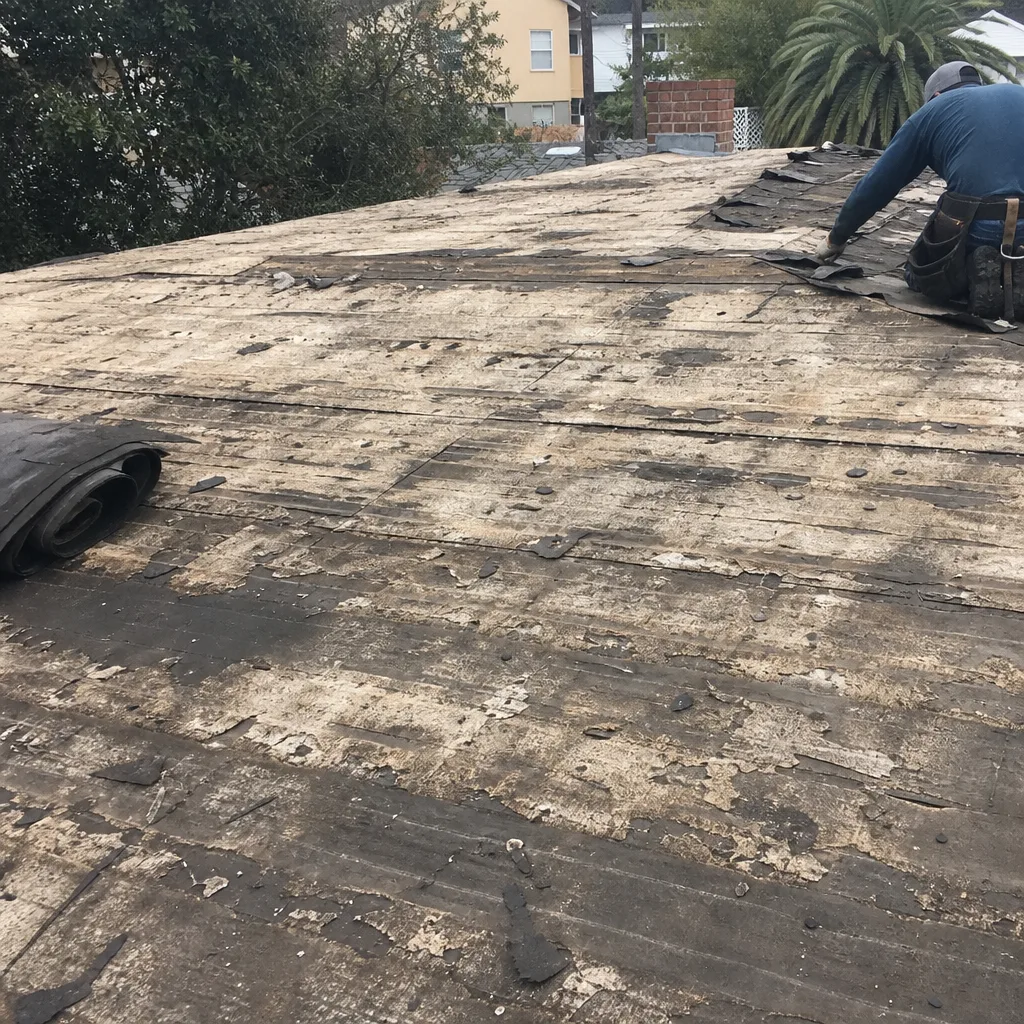 Before
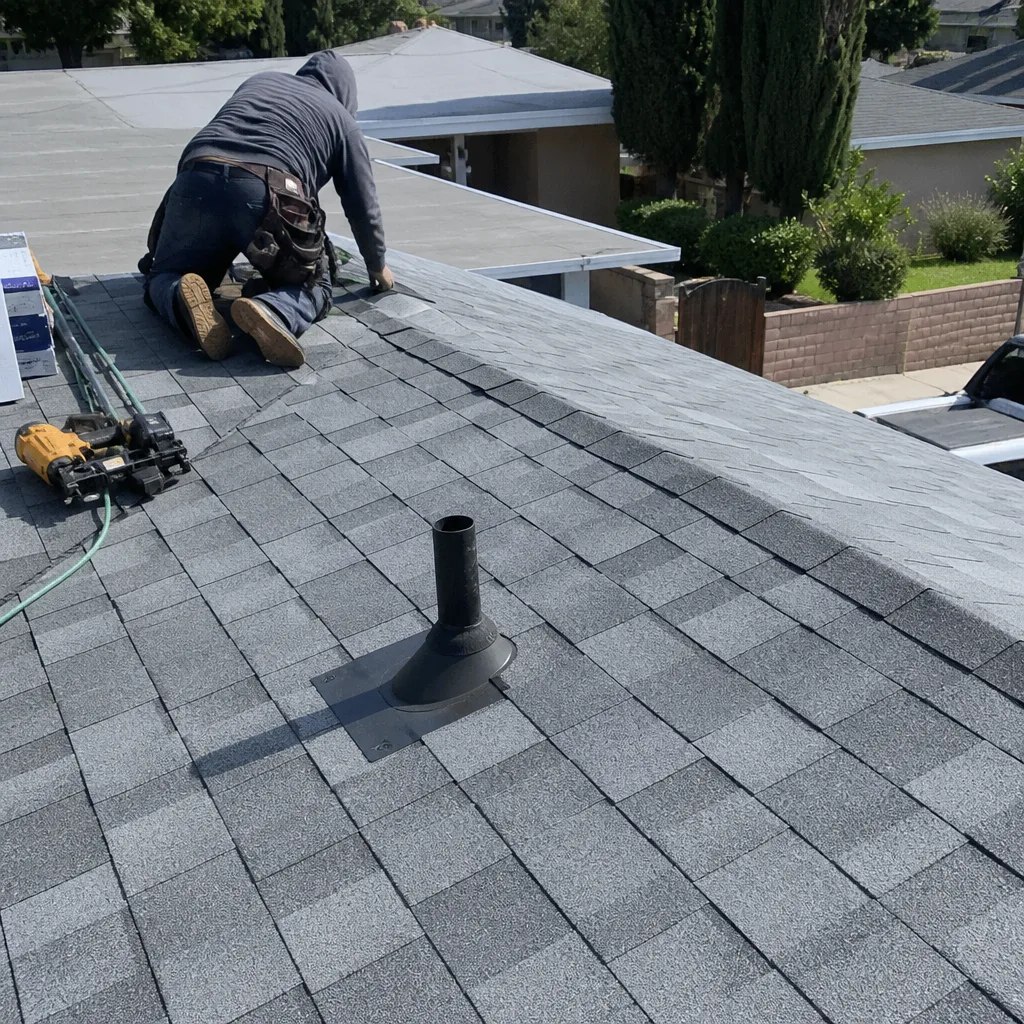 After
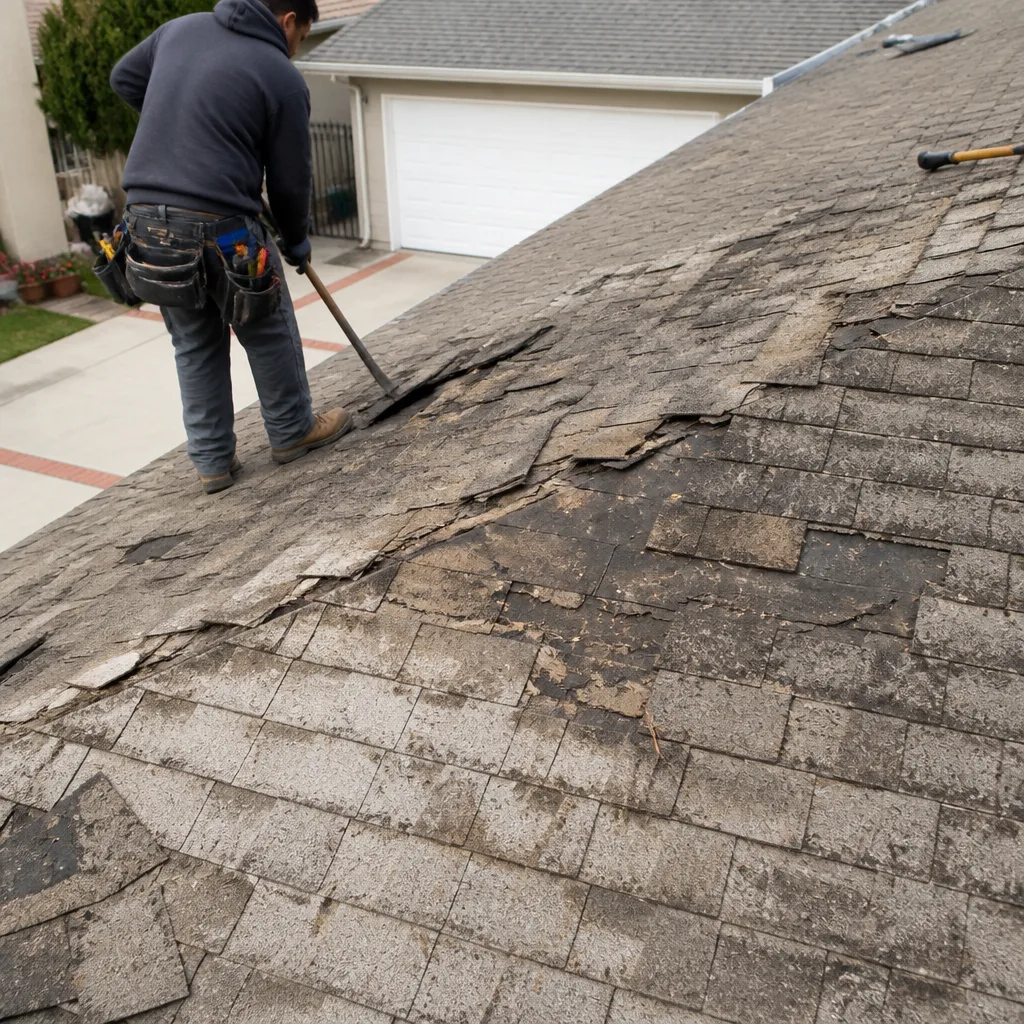 Before
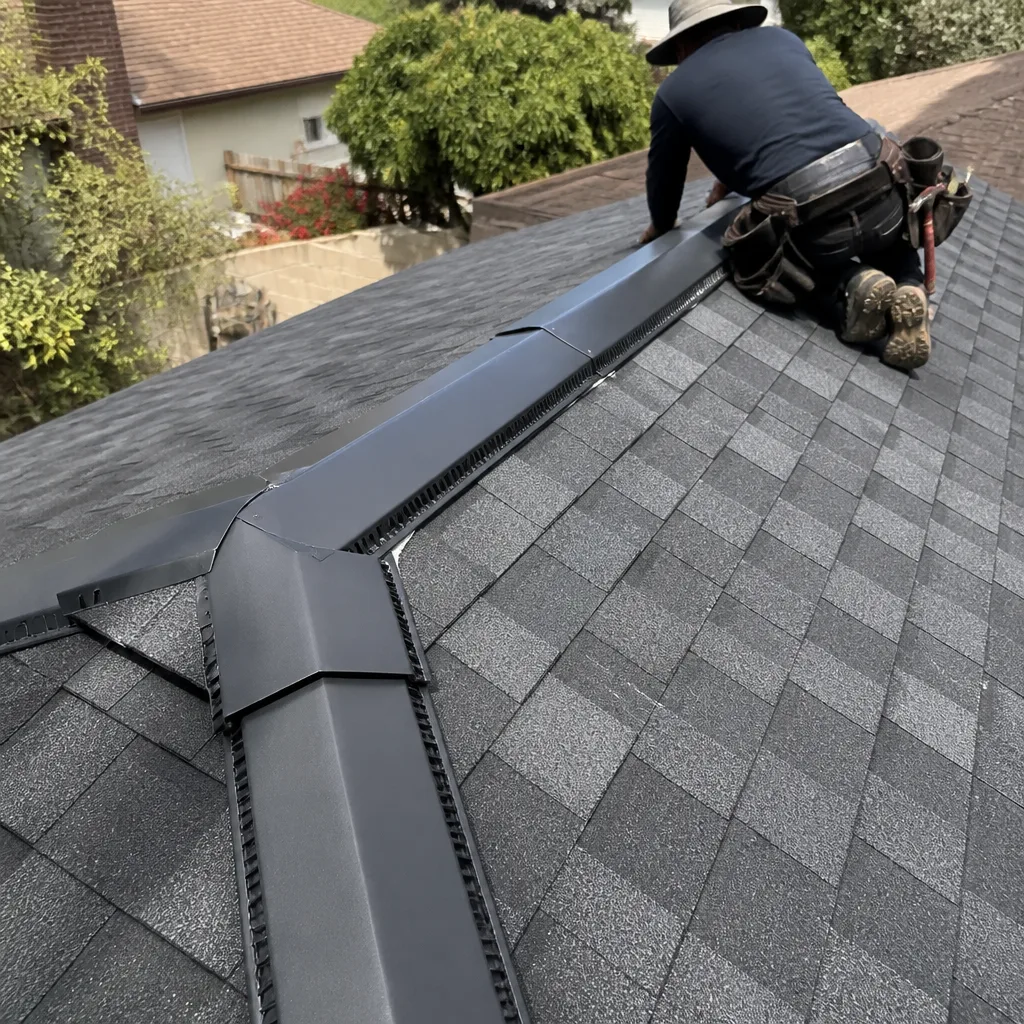 After
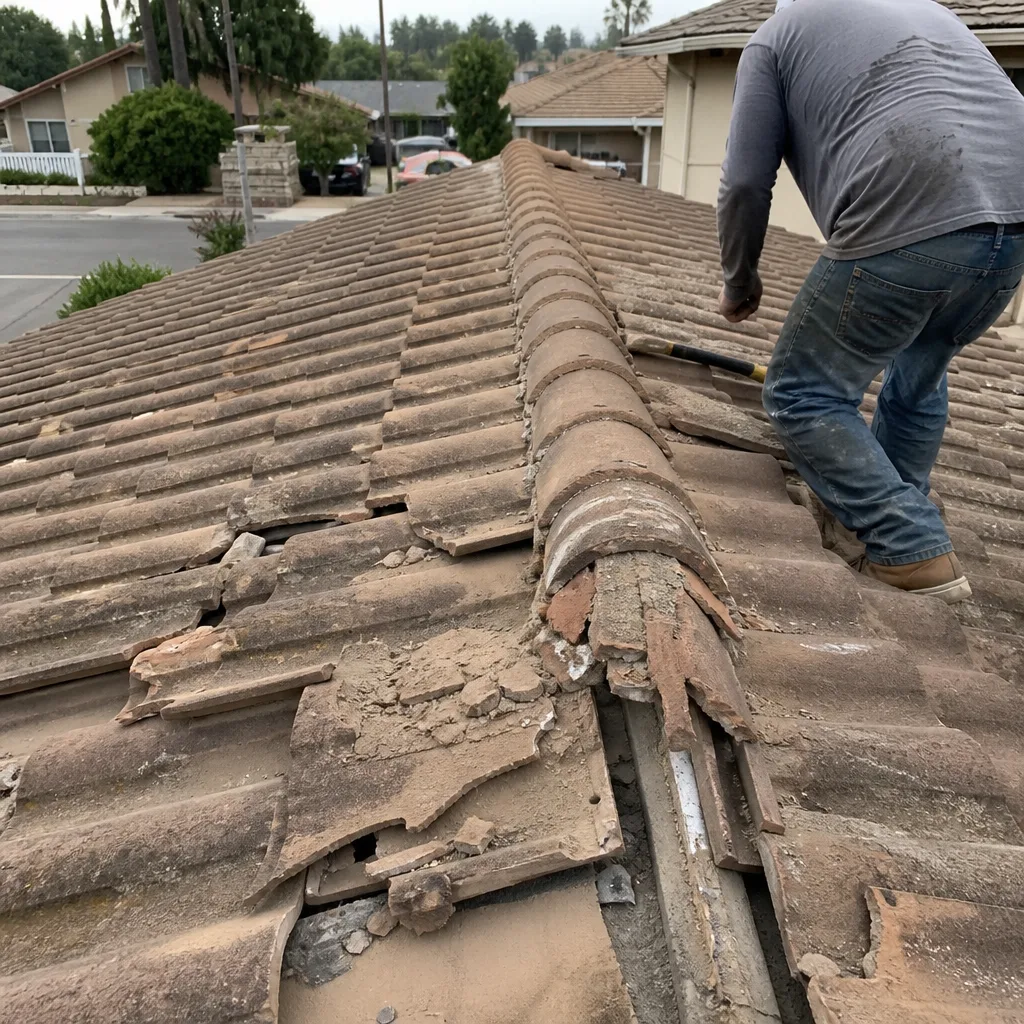 Before
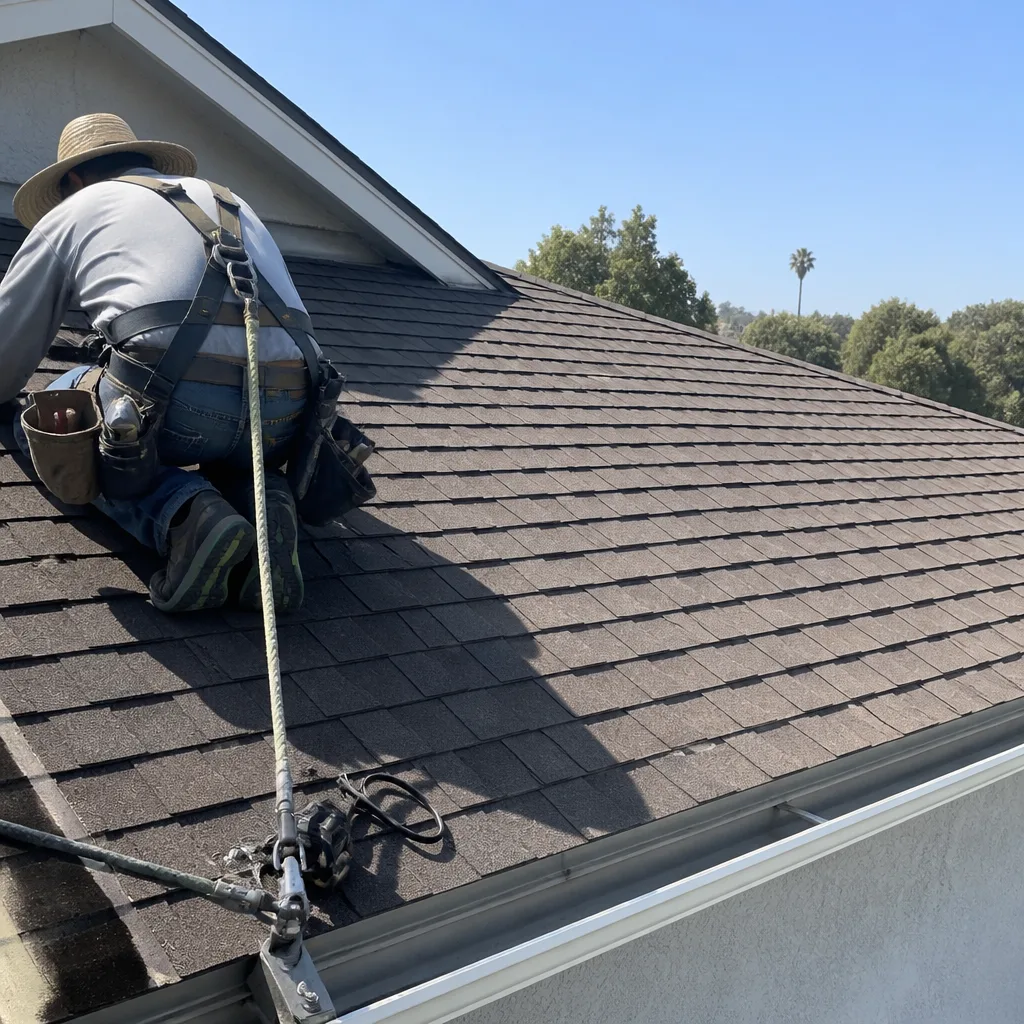 After